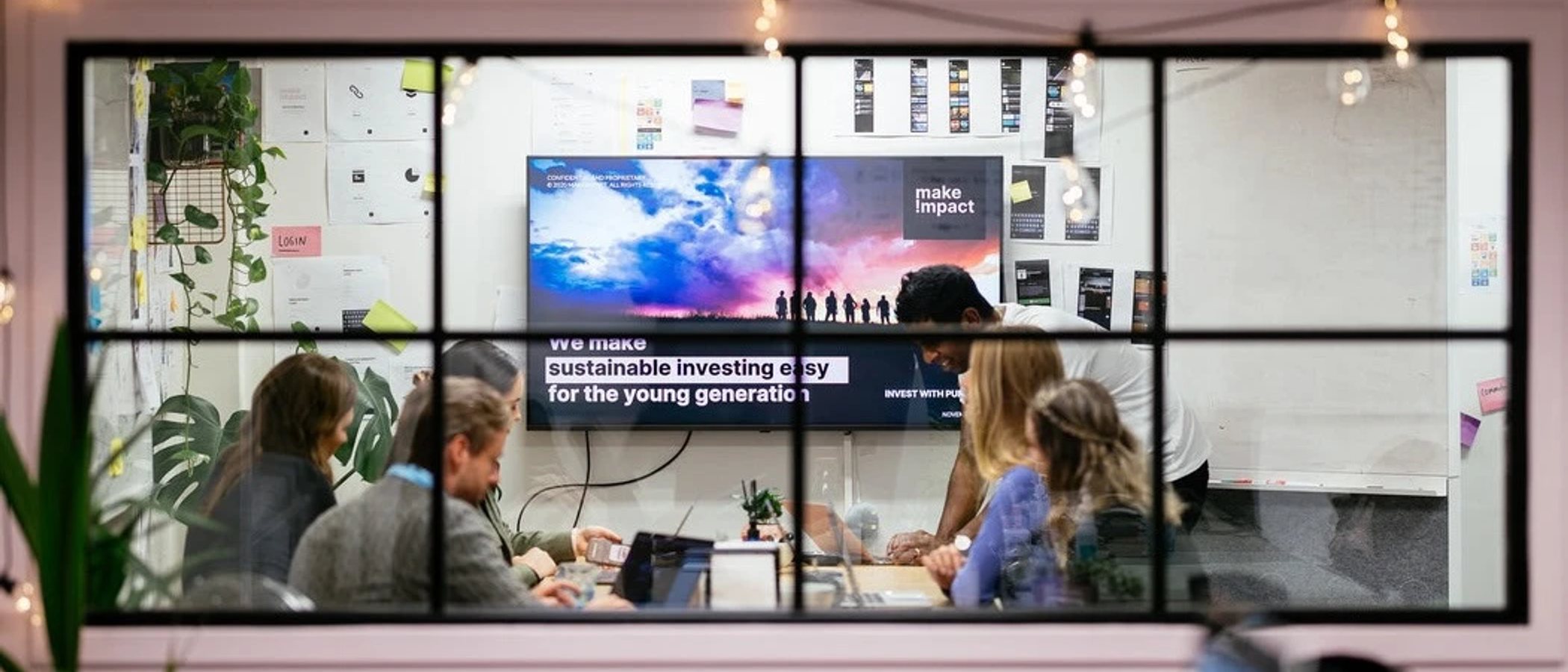
The company
Make!mpact is a Copenhagen impact-fintech founded in 2018, behind a sustainable-investment mobile app for a young generation new to investing. The app matches the seventeen UN Sustainable Development Goals to listed companies, so that someone who has never invested can start with companies that share their values and learn the investment world on the way.
- Founded2018
- WhereCopenhagen, Denmark
- ProductMobile app
- Websitemakeimpact.io ↗
The mission
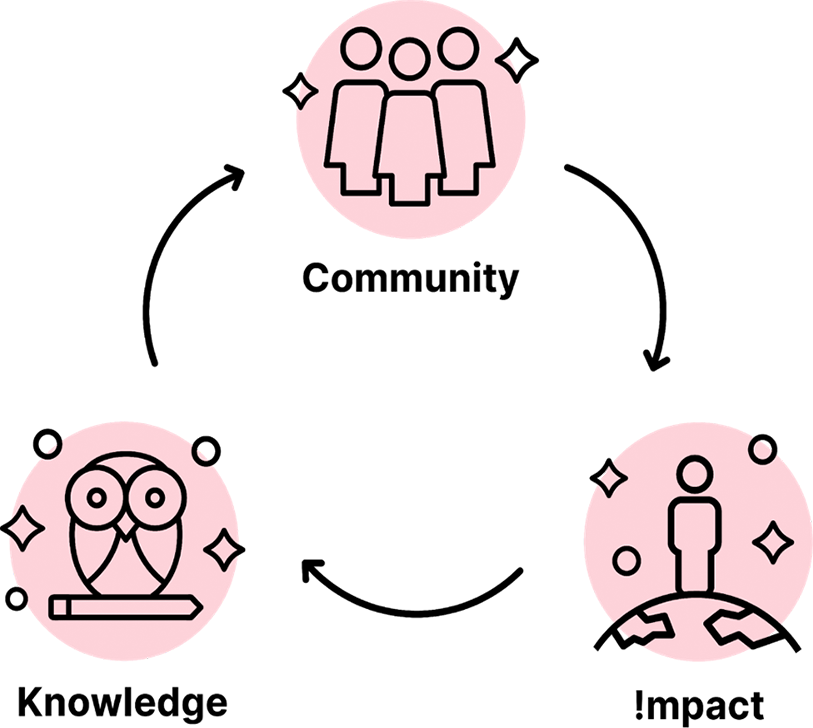
Make!mpact set out to change sustainable investing for a generation that felt left out of it: give them the knowledge, a community, and a way to make their money count for the planet. The question behind the product:
How can users be empowered to invest sustainably, while increasing engagement on the Make!mpact platforms?
The product
Make!mpact had three digital products, a mobile app, a website and a web app, and as product manager I led the teams behind all three.
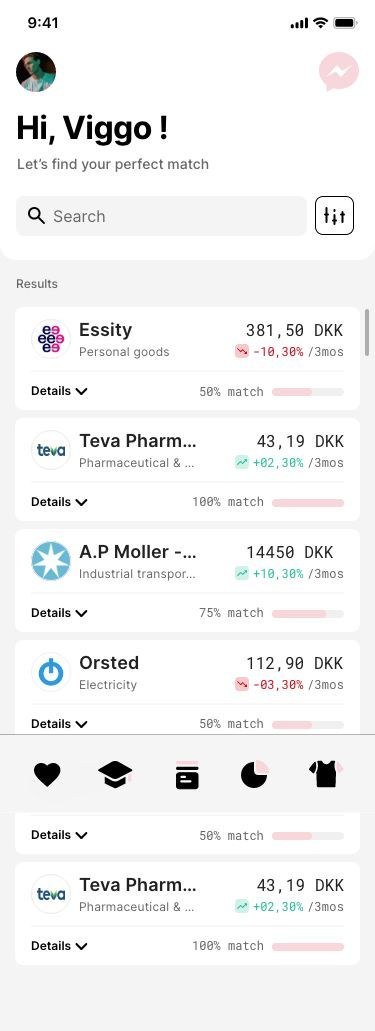
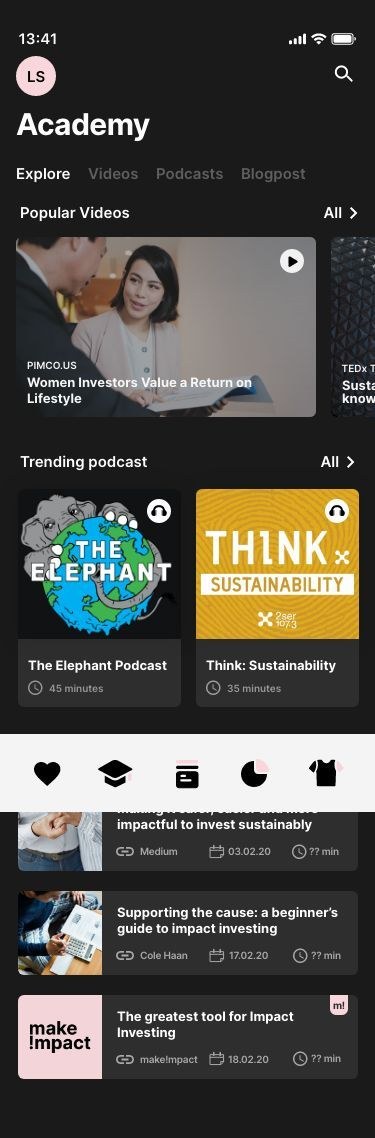
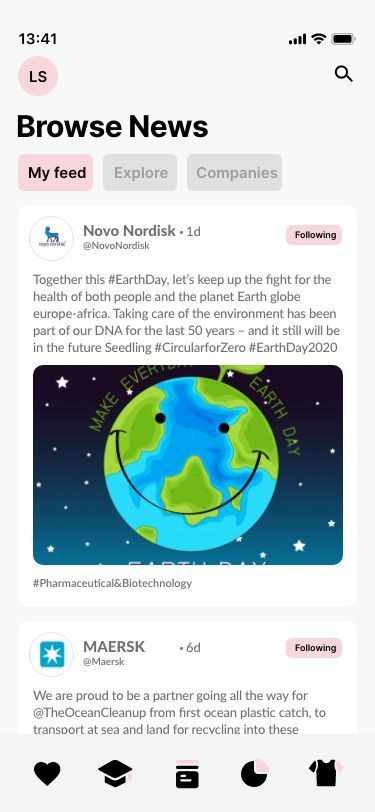
The app was where users found the insights and tools to invest sustainably, and a community of like-minded people to do it with.
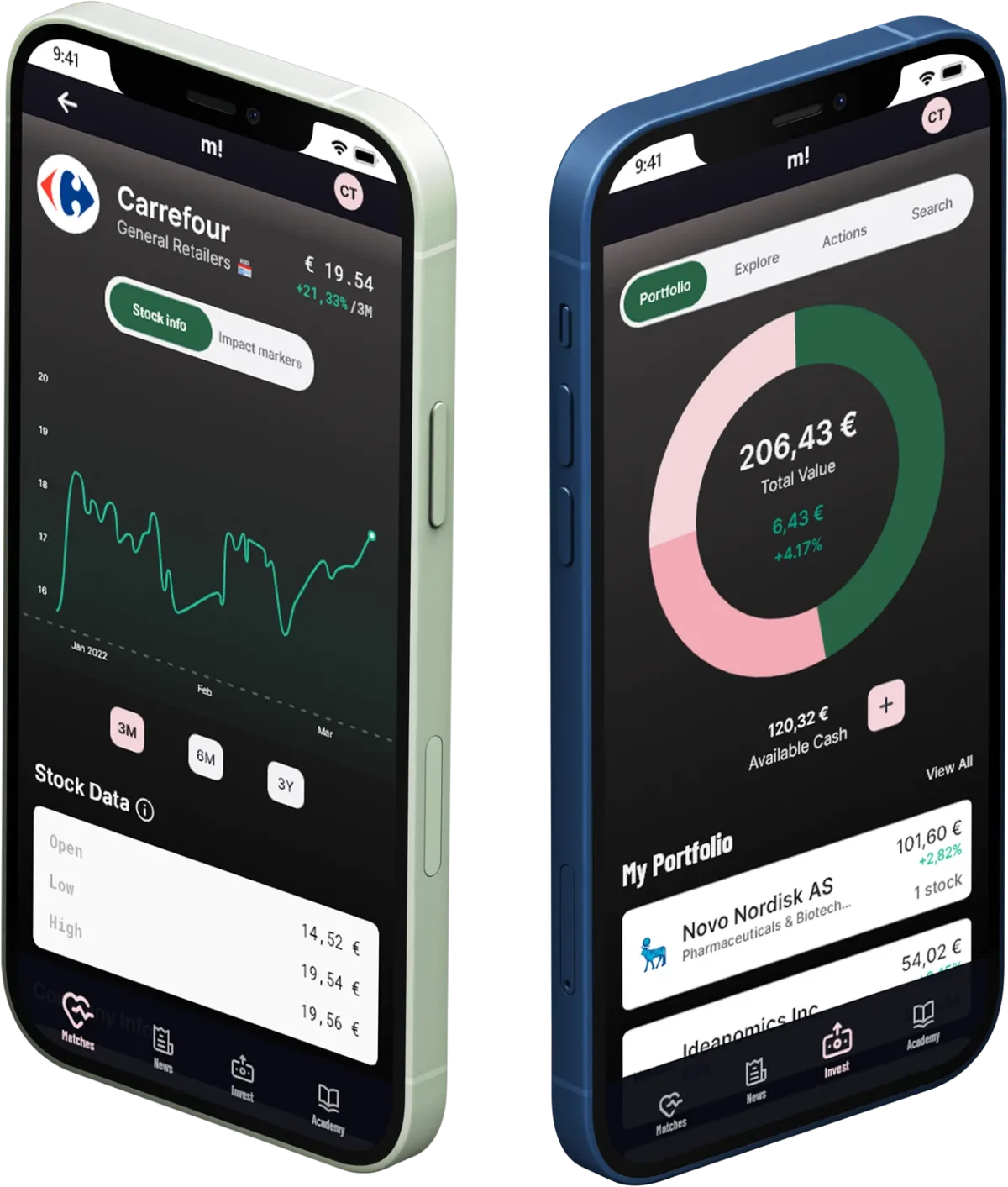
Three features carried the app:
My role
I joined Make!mpact in November 2020 as a UX designer. Within my first month the product manager left, and the CEO entrusted the product to me; I took the role on without letting go of the design work. The team I inherited was smaller than the one I left: building it up to twelve became part of the job.
I owned the roadmap and the team’s rhythm, from weekly sprint planning and demos to daily check-ins, and kept designing the wireframes and prototypes the developers built from. Every day I weighed what tech could build against what sales and the founders needed the product to deliver; I facilitated the team’s workshops and presented to stakeholders and potential clients. My research centred on the mobile app and the engagement it created: its pain points, user feedback, and who we were designing for. Three questions kept returning: the onboarding, the features worth adding, and how accessible the app was to someone new to investing. Underneath was the real challenge: carrying the product through everything a start-up asks of it, above all the move from freemium to premium, while staying true to the company’s mission and values.
Three pieces of work shaped the year: Project June, the Academy redesign, and building the team.
Project June
The brief. On 1 June 2021, the date that gave the project its name, the app had to launch as a premium product for every user worldwide, with a seven-day free trial. Its little over a thousand users were all on the free version. I led the work the switch required: the pricing model with the sales team, the user profiles, the flows for current and new users, the launch marketing and the onboarding redesign. The aim was to bring premium in without losing the people who had joined for free, and to make a complex switch feel simple on their side.
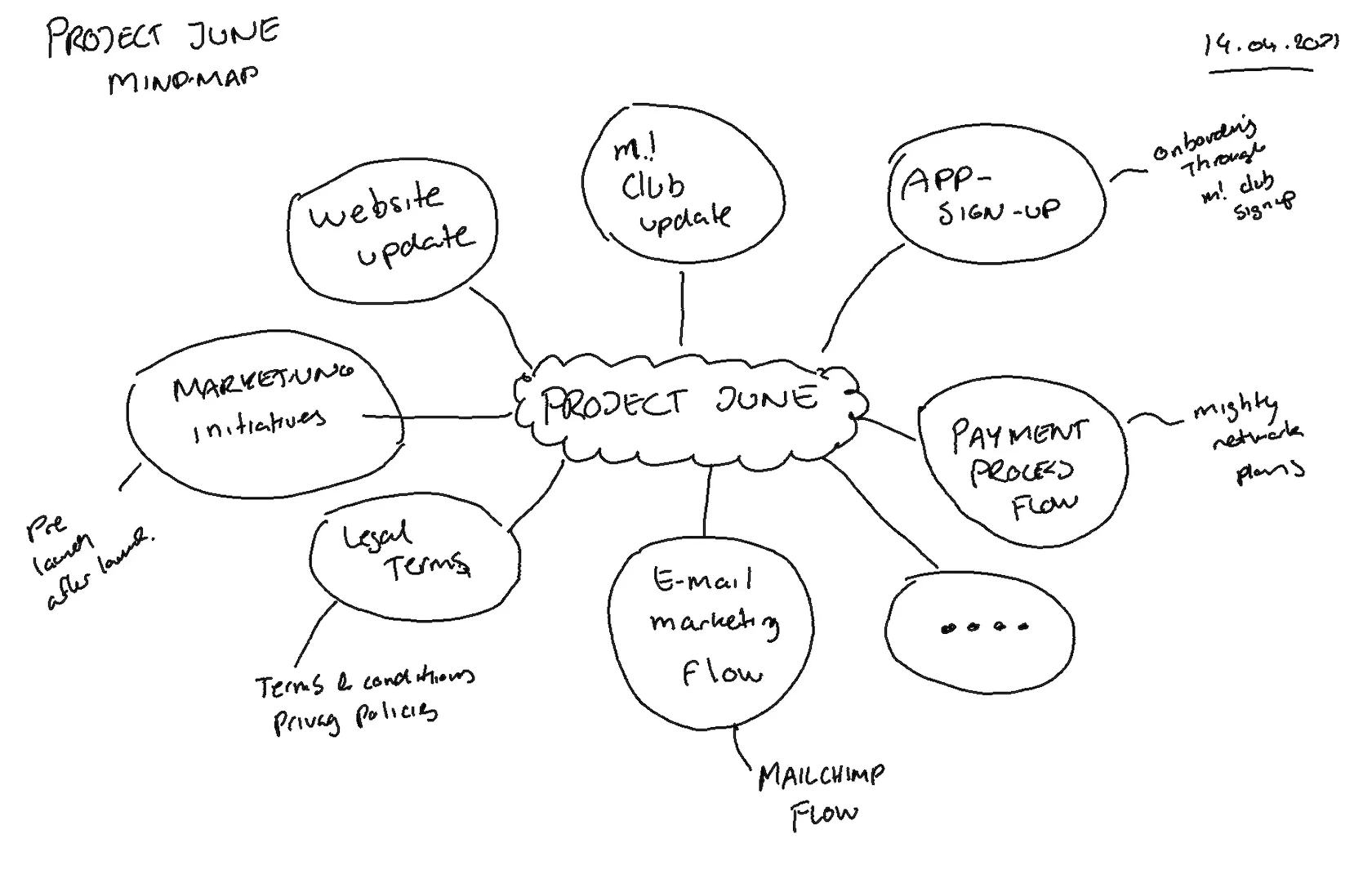
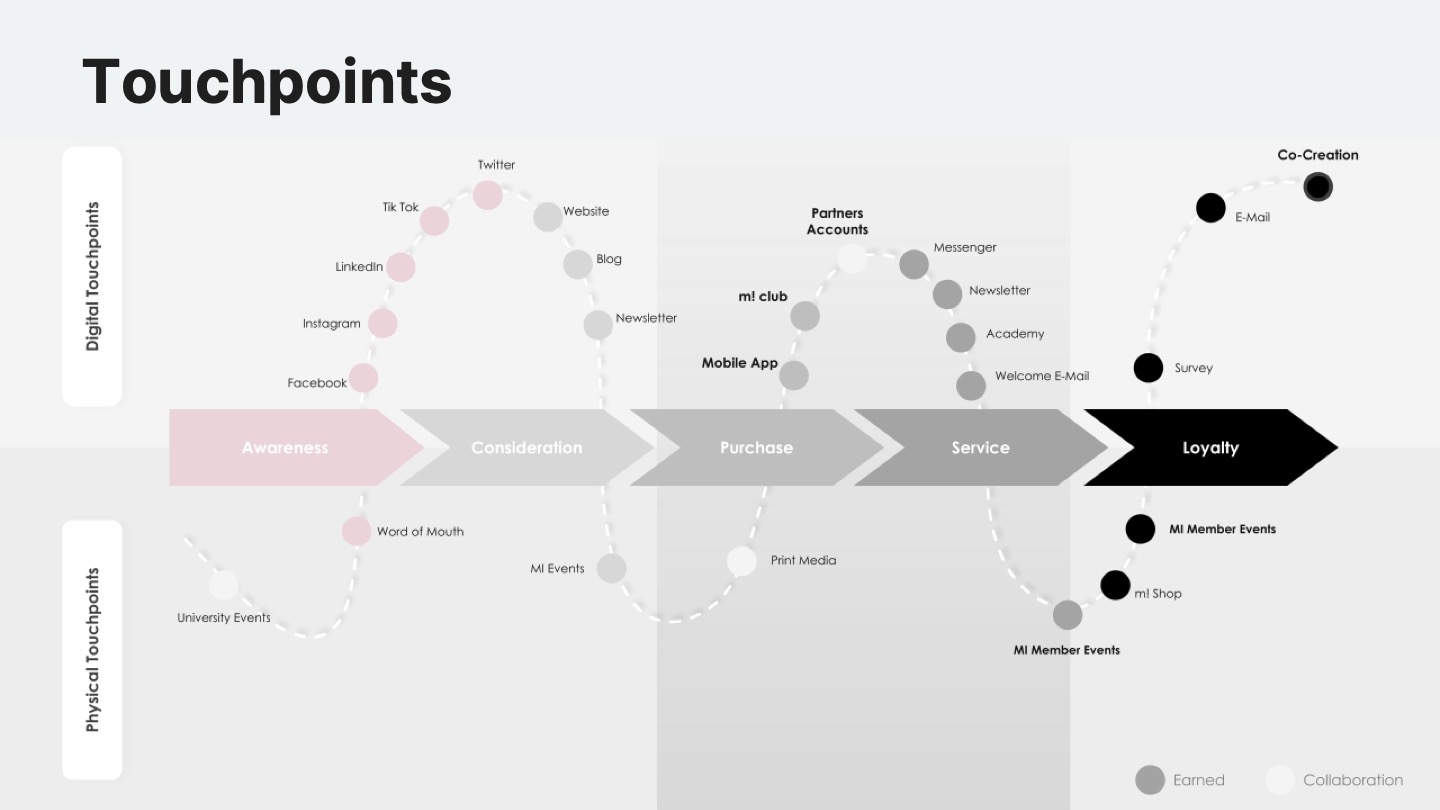
Who we were designing for. Before drawing anything, I ran facilitation workshops with the team to pool what sales, content and development each knew about the people using the app. Out of them came persona profiles, from first-time to experienced impact investors, each with what they expected from the app, the academy and the club. They shaped the value propositions and the subscription strategy, and settled more than one debate. We also mapped every touchpoint, digital and physical, from first hearing of Make!mpact to bringing a friend, so the switch was designed for the whole journey, not only the sign-up screen.
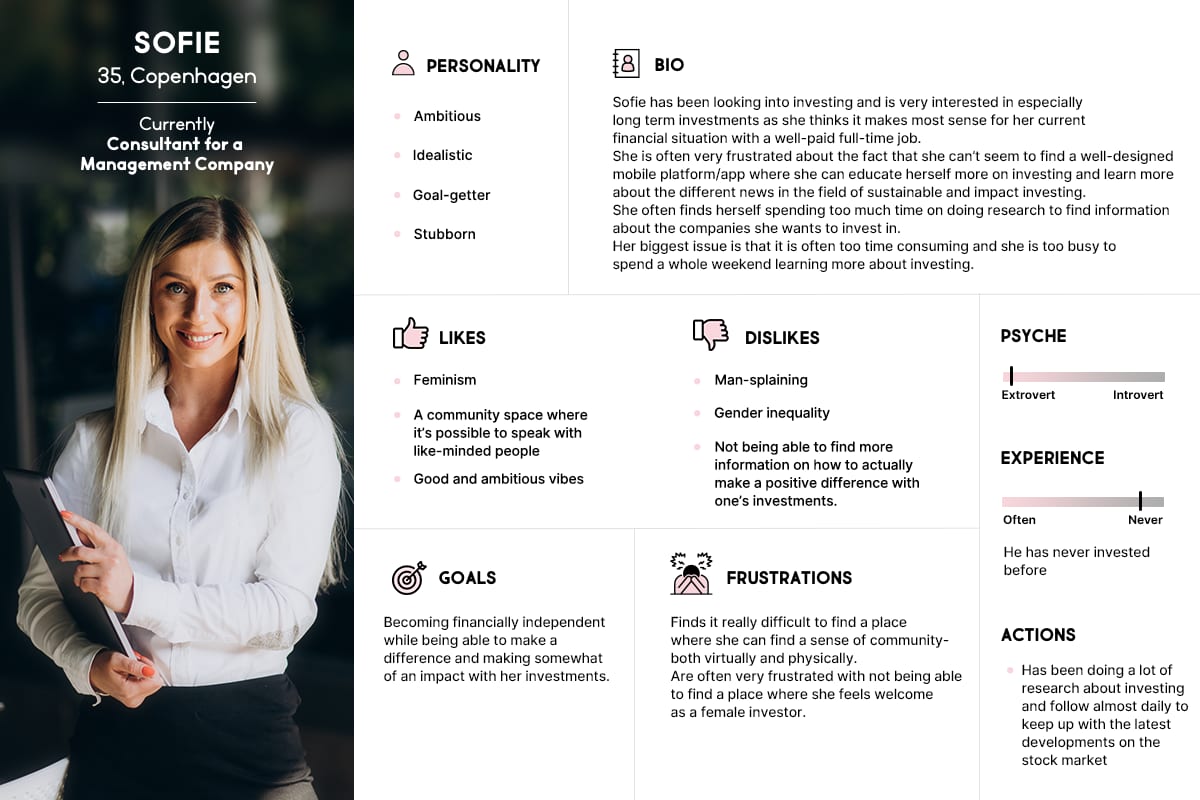
The plan. Three steps on a tight calendar: user flow and wireframes in April, the new onboarding coded in May, tests and fixes for 1 June.
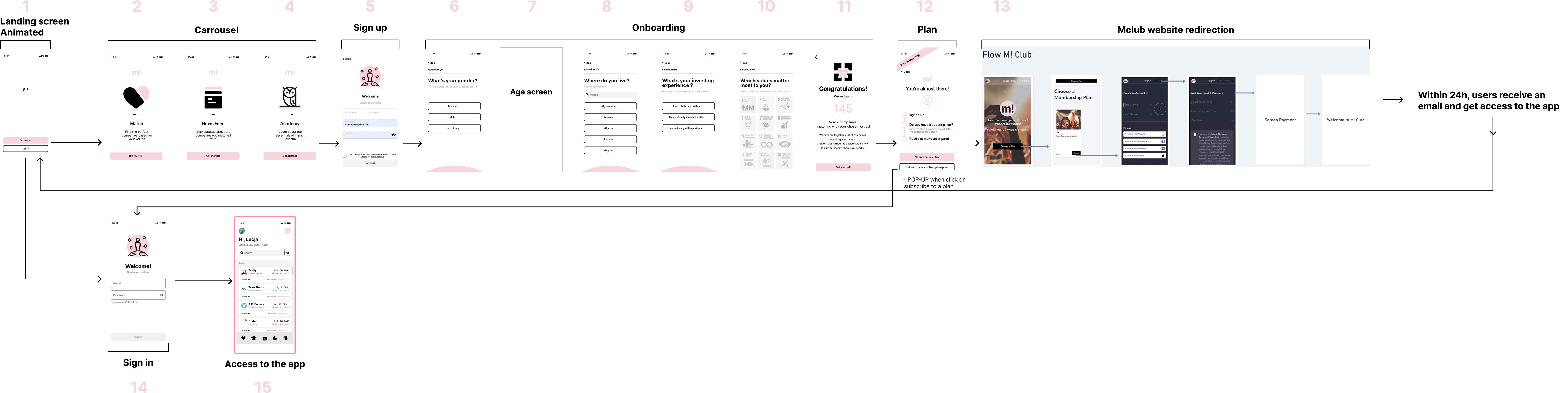
The flow. The whole onboarding moved out of the app onto the m!club website: people subscribed and created their profile there, received an approval email, then got access. We questioned every step of the old flow and removed those that did not earn their place: every step removed was one fewer place to lose someone.
The rhythm. The switch touched sales, content, design and development at once, so I ran it as one project: one weekly meeting with a fixed agenda and an owner for every item, and one shared folder so everyone worked from the same version.
The result. On 1 June 2021 Make!mpact launched worldwide as a subscription app, four months after the decision. More than a thousand free users moved to a paid model without a relaunch, new users arrived looking for sustainable investments, and the company had its first subscription revenue. With the new onboarding, user conversion rose by 25%.
The Academy redesign
The Academy was the cornerstone of Make!mpact’s promise: the knowledge to start investing sustainably, and its resources deserved a better experience. Working closely with the stakeholders, I conceived the new Academy as a digital learning space and took it from prototype to wireframes, from the guide, explore and academy tabs to the pages to read, watch and listen, tested with the team before the developers took it on.
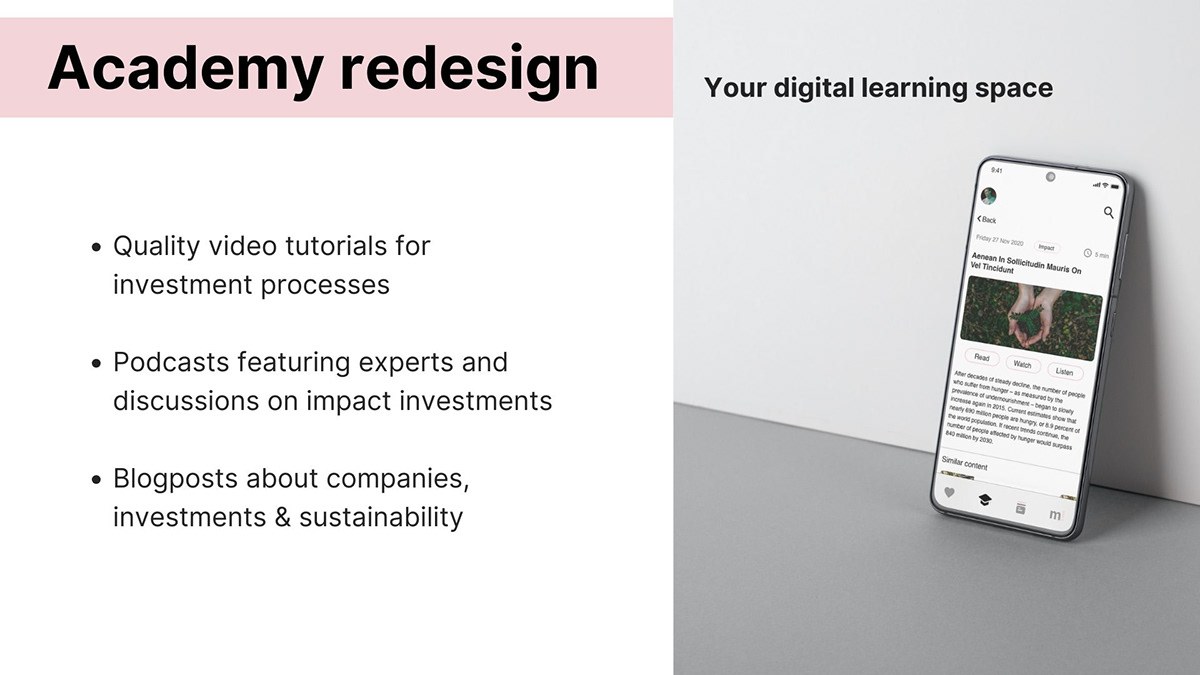
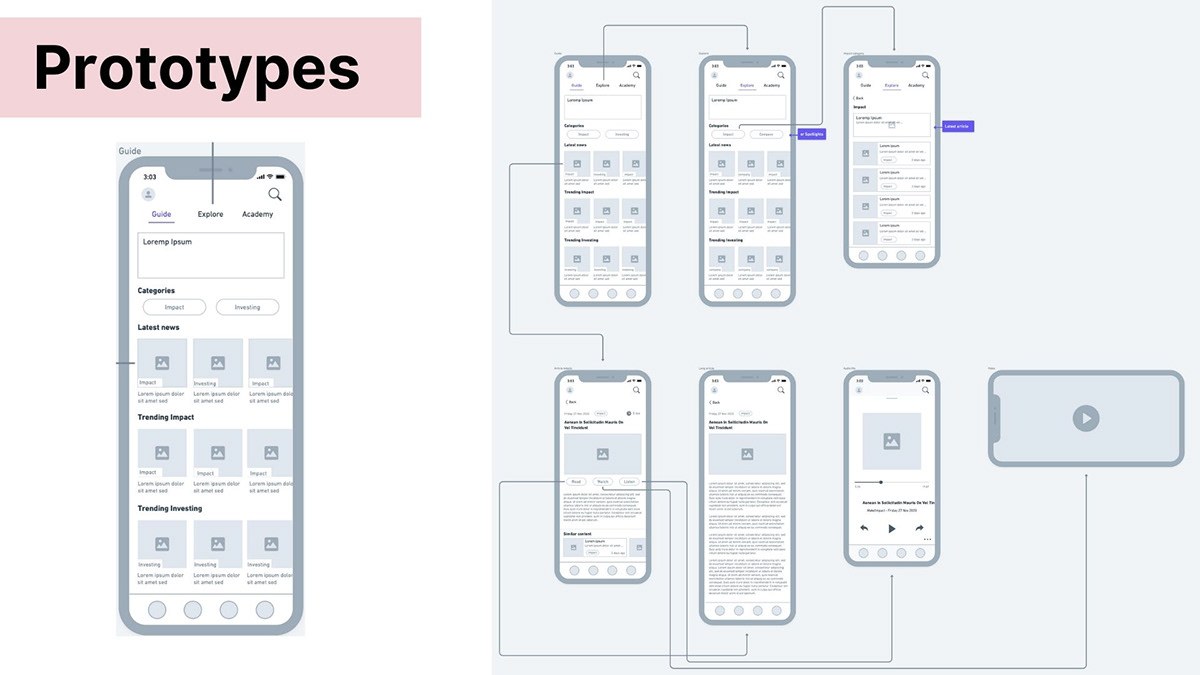
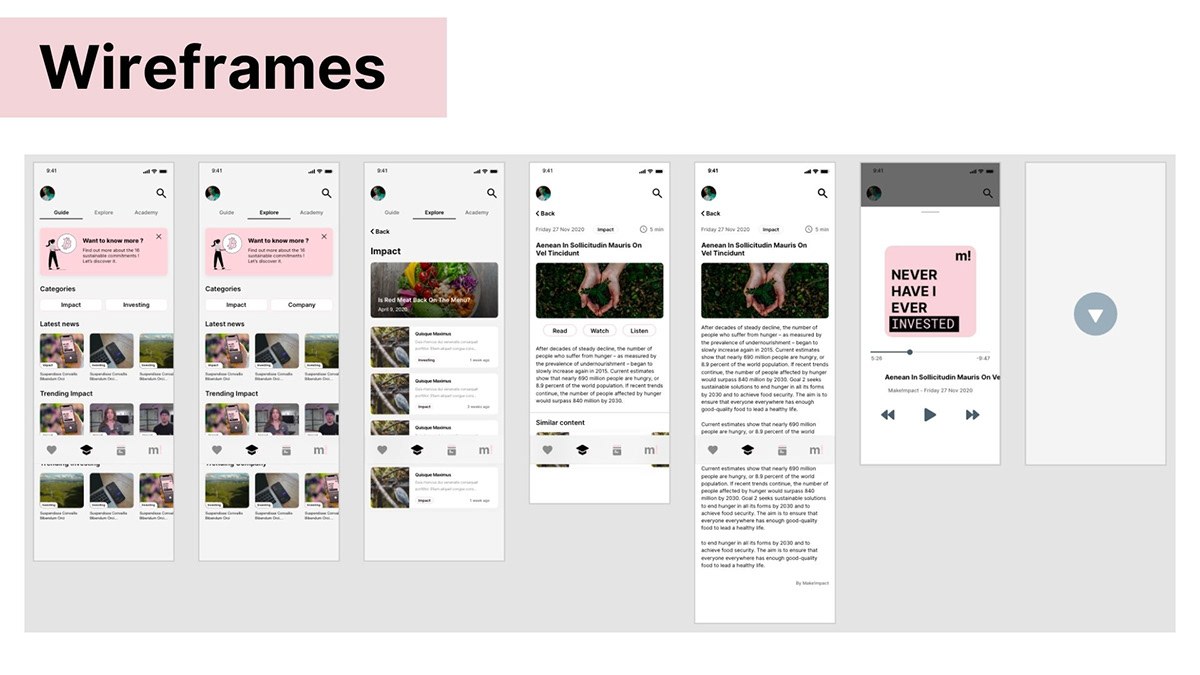
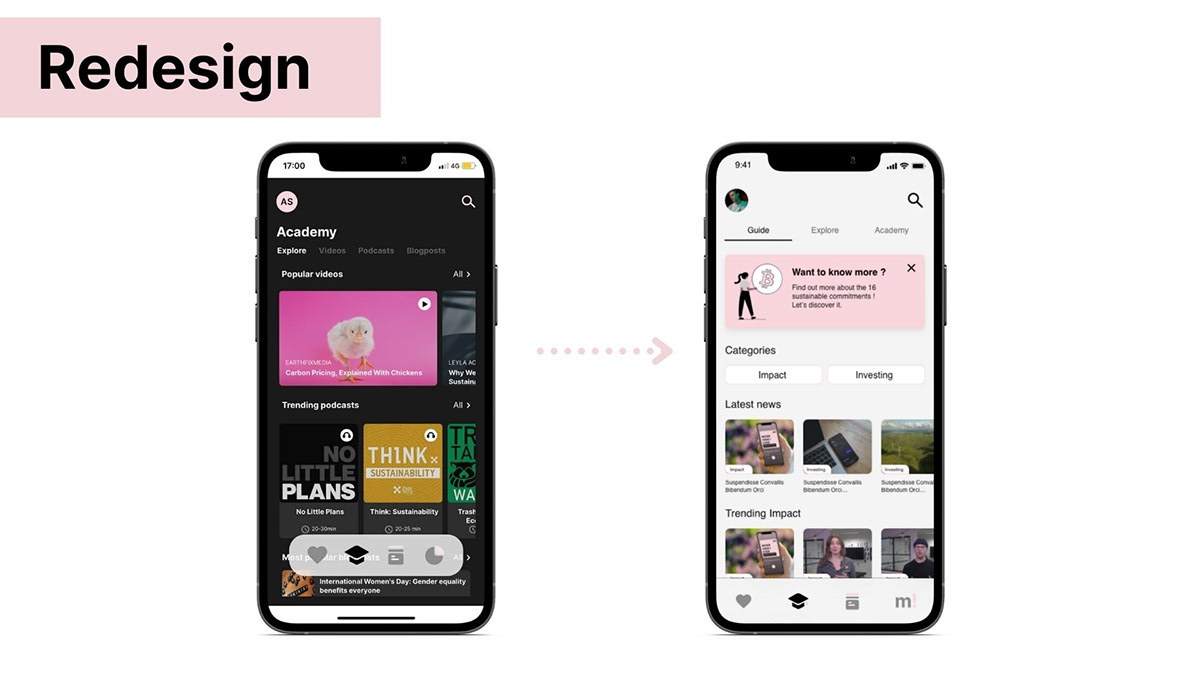
The result. The redesign improved engagement with the Academy.
Building the team
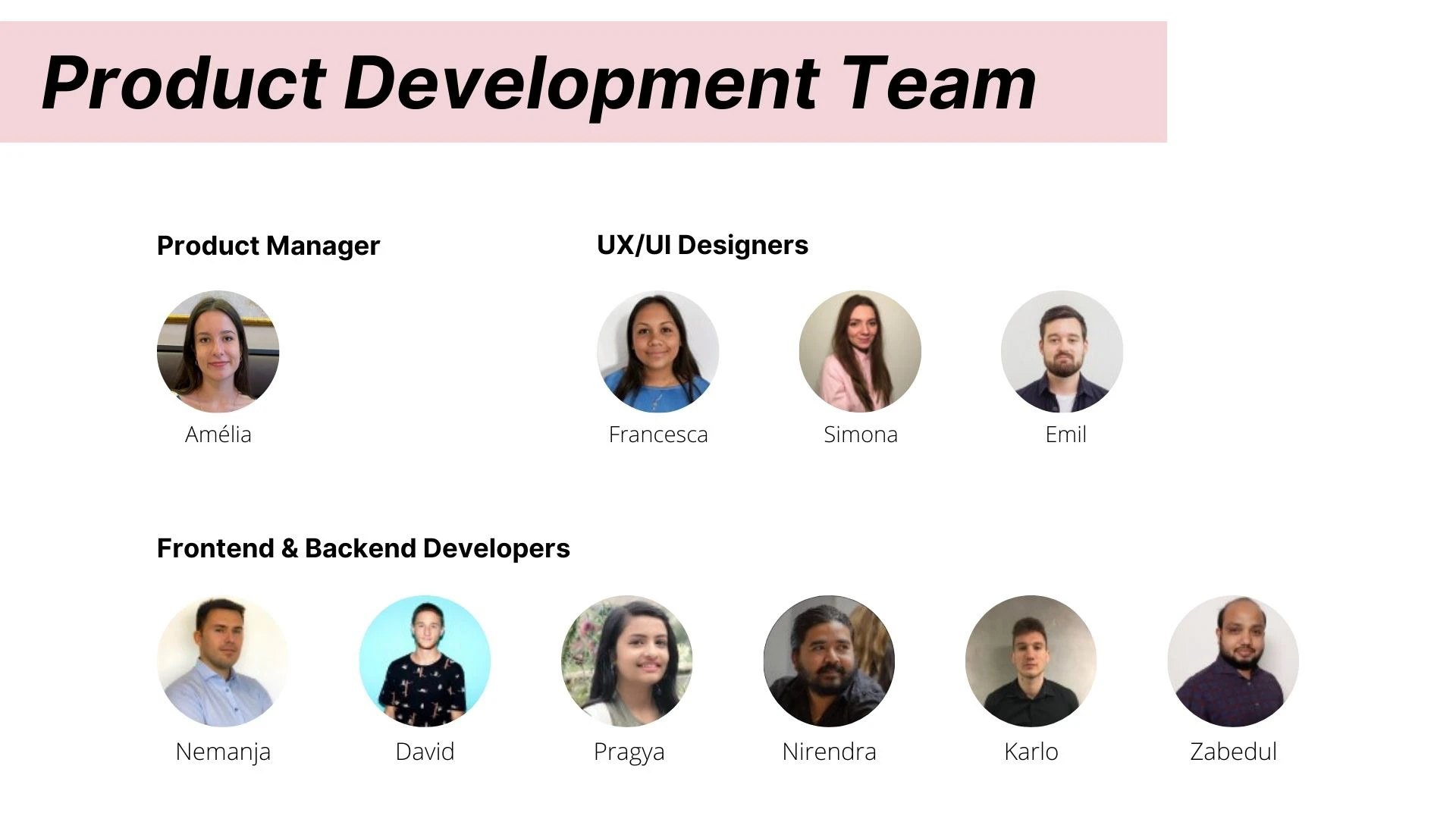
As the company grew, the product development team had to grow with it, and halfway through my time there turnover left gaps to fill. I owned the recruitment, from the job posts and CVs to the interviews, and onboarded each newcomer with the playbooks so they could contribute in their first week. The aim was a team strong enough for Project June, and strong enough to leave Make!mpact in good hands. Through that process I assembled a team of twelve developers, designers and content people from a dozen countries, Denmark, Italy, Belgium, Poland, India and Sri Lanka among them.
Bridging them was as much my job as the roadmap: a team that international does not align by itself. I paid attention to how each person preferred to work and to be heard, made room for it in the weekly rhythm, and made sure a decision taken in one corner of the team reached the others in words they recognised. The part I am proudest of is harder to show on a slide: people felt safe enough to name what they thought would not work, before it cost us anything. That is the hardest thing to build as a manager, and it is what let us ship a premium model in four months.
Handing over
I left Make!mpact in July 2021 with the premium app live, the Academy redesigned, and a team of twelve that no longer needed me to run it. I recruited the UX/UI designer who took over my role, coached them through the roadmap, the rhythm and the playbooks, and stepped back while I was still there, so the hand-over happened with me in the room.
A start-up lives on its runway, and I watched the founders make decisions under that pressure in record time, the switch to premium among them. The CEO had a line I still hear: forget about launching something 100% perfect; 70% of perfect is good enough, and the last 30% is where you lose your time, your effort and your money. For a perfectionist like me, it was eye-opening, and a challenge. It taught me to ship the 70%, then let users show me which part of the remaining 30% is worth the effort.
Takeaways
- Make!mpact was the first product I owned end to end. What made it run was communication: developers, designers, managers and business developers each saw a different product until we talked about the same one every week.
- Removing steps is product work. The two boxes we crossed out on the flow did more for the switch than anything we added.
- A fixed rhythm holds a changing team together. Monday planning, Friday demo, one Project June agenda: one shared plan for a growing team, not twelve separate ones.