The company
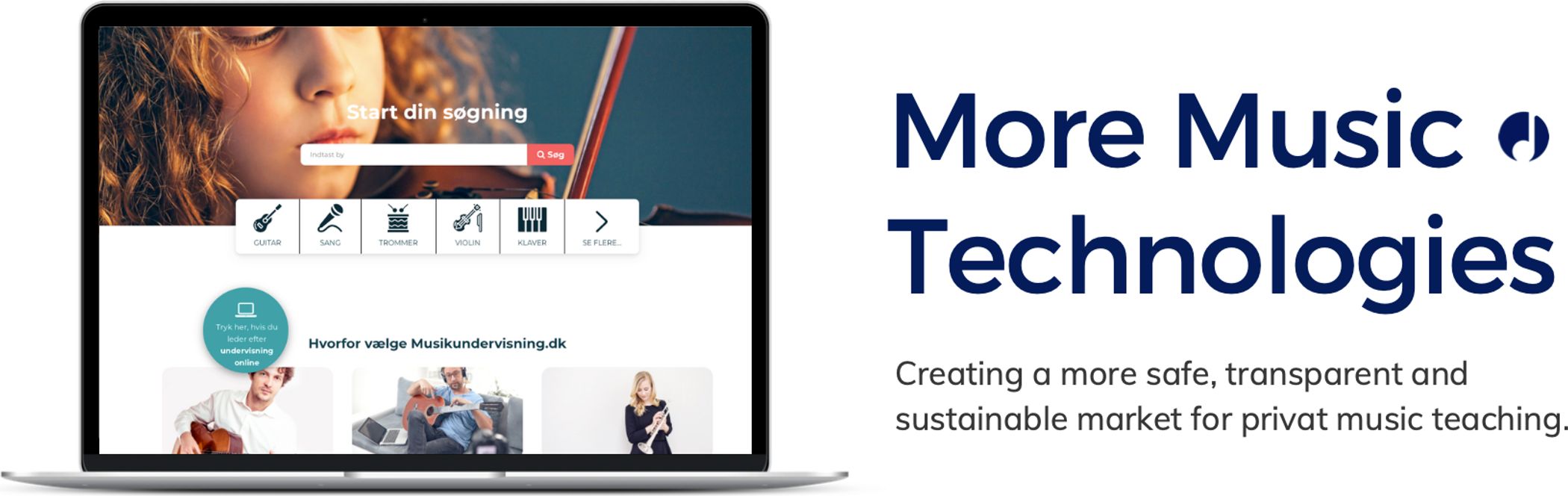
Since 2014, More Music Technologies has run a two-sided platform for private music lessons in four markets, with Musikundervisning.dk as its Danish site. Every teacher goes through rigorous checks, in line with its purpose: a safer, more transparent and more sustainable market for private music teaching.
- Founded2014
- WhereDenmark
- ProductWeb platform
- Websitemusikundervisning.dk ↗
The challenge
Musikundervisning.dk had no trouble attracting teachers. The harder part was students: turning a visit into a booked lesson, and a first lesson into a lasting commitment. The brief: raise conversion and the value students get, through better matching and more reasons to book again, without lowering the company’s safety standards.
The research question
To keep the work on the student’s side of the platform, I framed it around what keeps people learning an instrument: their motivation.
How can users be enabled to meet their motivational goals in learning music through increasing user engagement?
The process
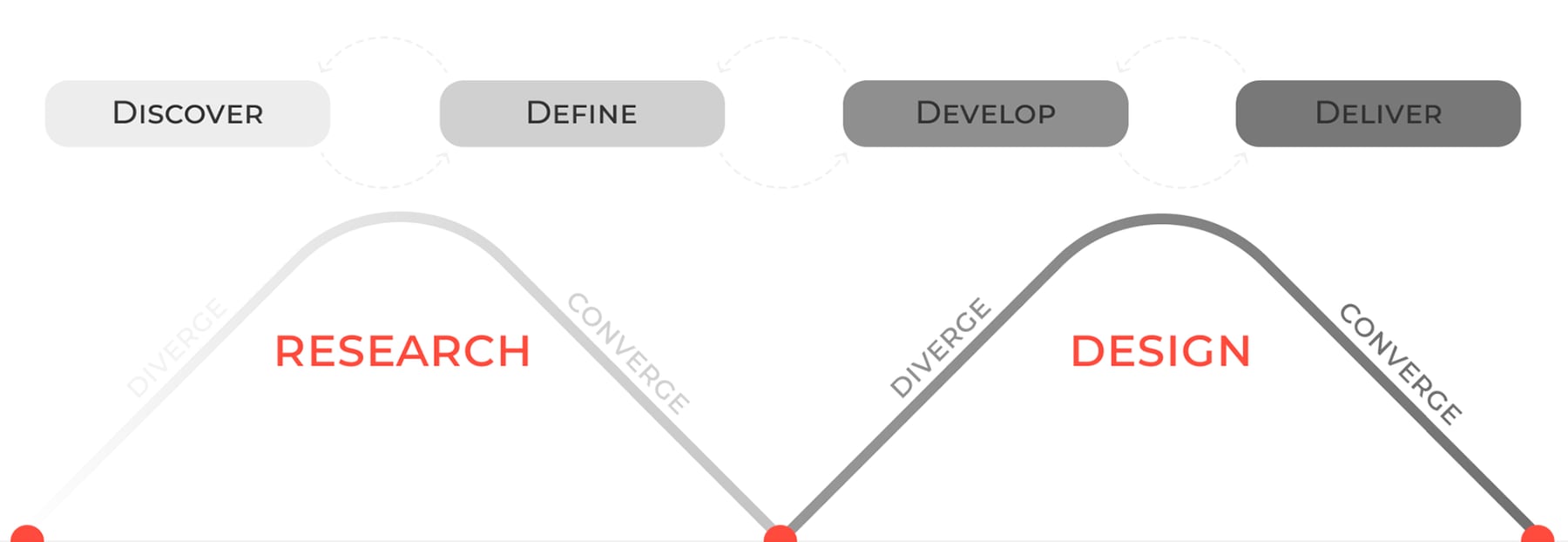
I structured the four months on the Double Diamond, which gave each stage a clear purpose: qualitative and quantitative data, interviews with music learners and players, and concept testing, each step informing the next.
The solution
Findings first; the research behind them follows below ↓
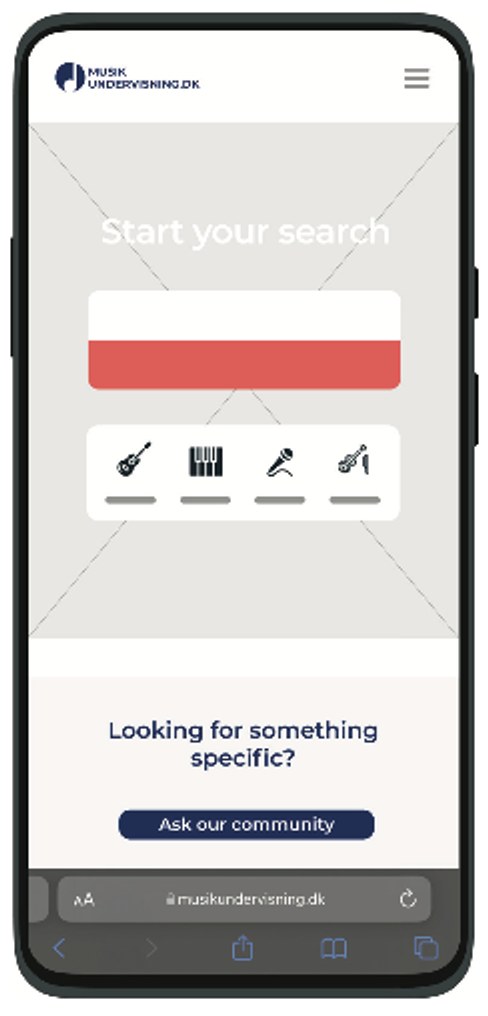
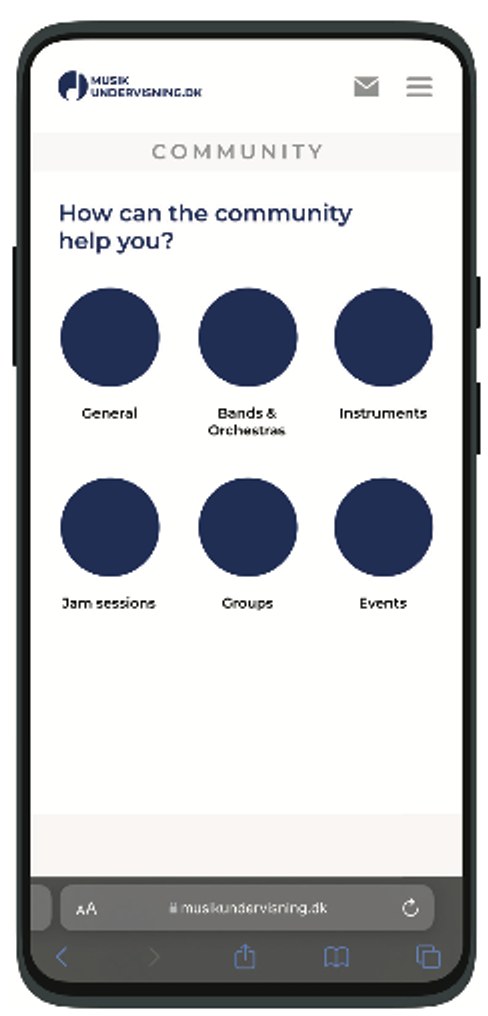
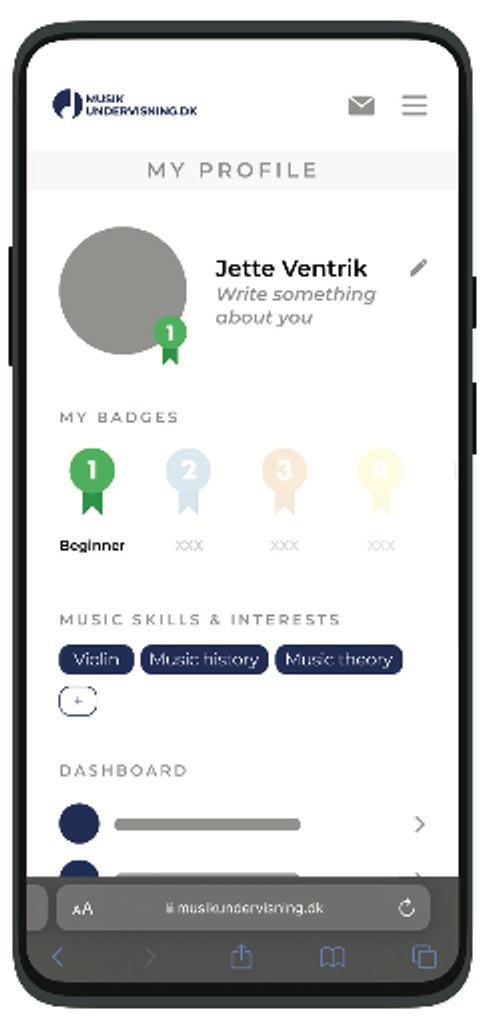
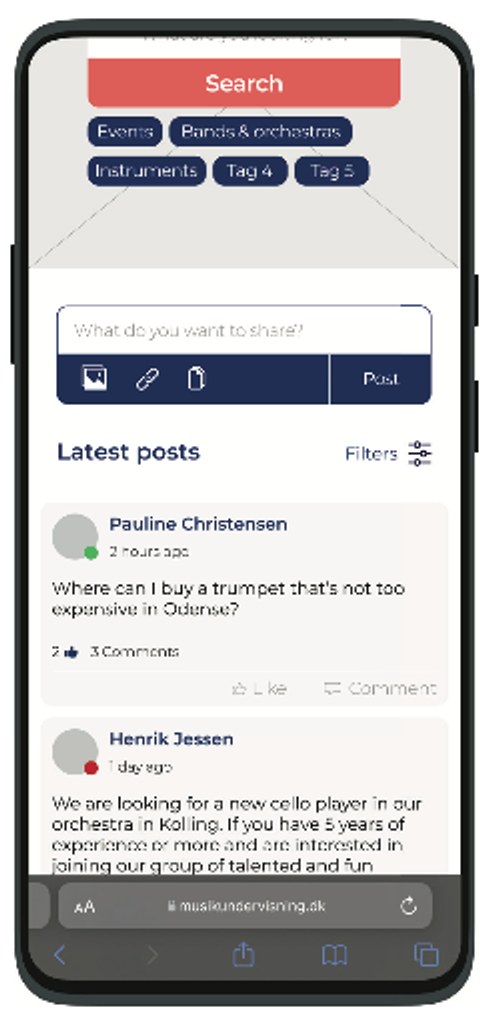
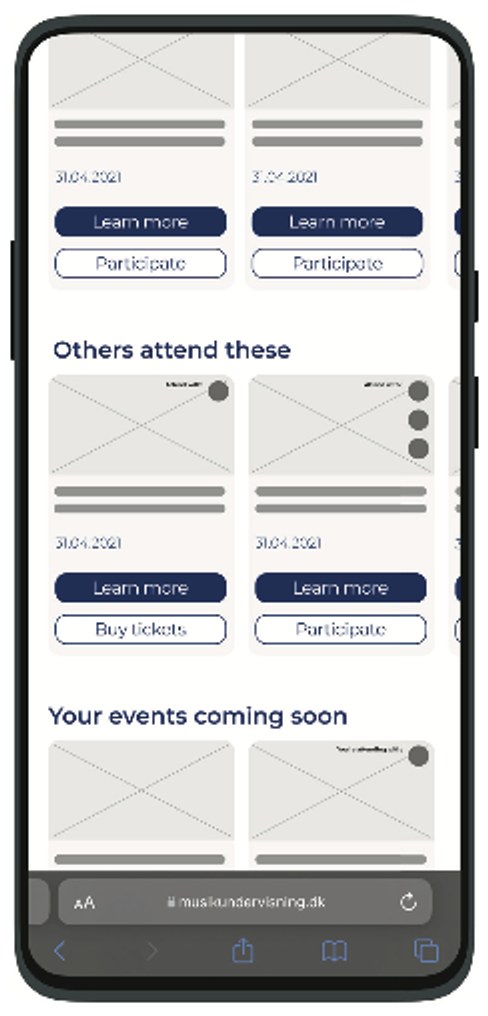
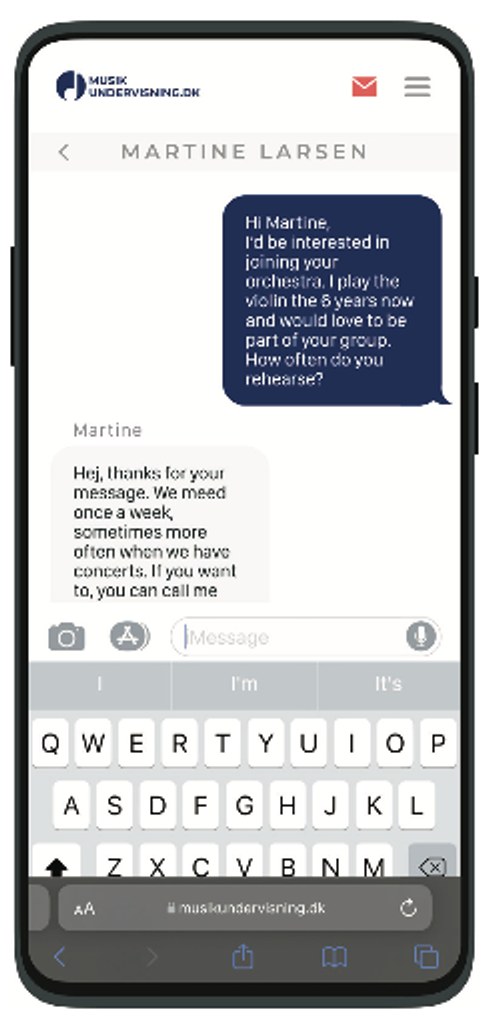
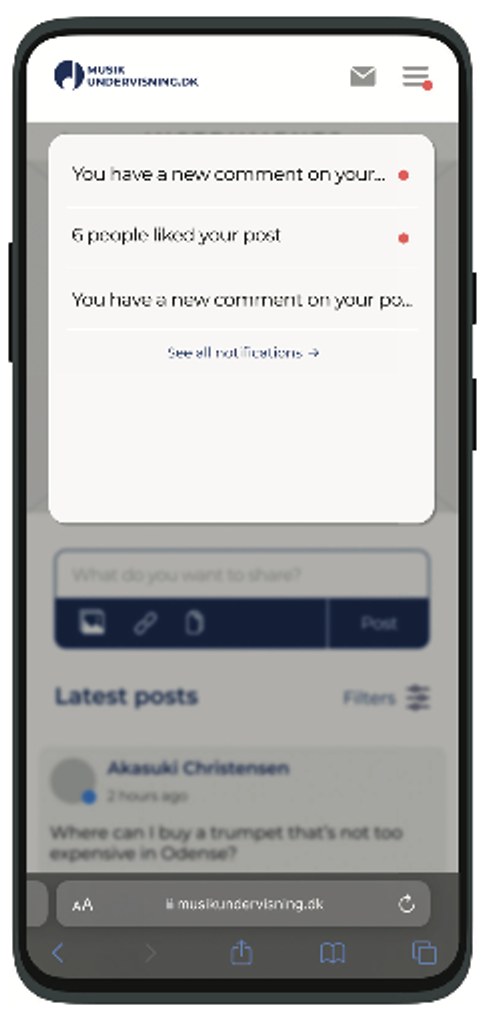
The concept. A community built into the company’s own website, around the lessons. It starts with the match: students search any kind of lesson to find the right teacher, and the skills and interests on their profile shape the groups and events suggested to them. Forums, groups and chats keep students and teachers in touch; jam sessions and events bring them together online and in person. Students get a safe space to learn and play together, and a reason to book the next lesson.
The prototype. We designed the concept as a mobile prototype. These are its key screens:
The research behind it
Discover
Desk research mapped the trends shaping the field, from social networks to matchmaking and gamification, and the platform’s own pain points: a star rating that says little about a teacher, and matching a student with the right teacher. A literature review covered online communities, engagement and gamification theory; a benchmark compared how six platforms build community. We then interviewed six people: five musicians and music students, and a trumpet teacher on the platform.
Define
A data-clustering workshop sorted everything into themes (communities, gamification, engagement, trends, benchmarks) and reshaped the problem into the research question above. The interviews set the direction: people keep playing because of other people. As one musician put it, “Music should be seen as a network, and not as a product.”
Personas
From the interviews we distilled four personas, covering the most common profiles among active users, each a group sharing one attitude: the Social Adventurer, the Advice Seeker, the Companionable Sophophile and the Community Manager.
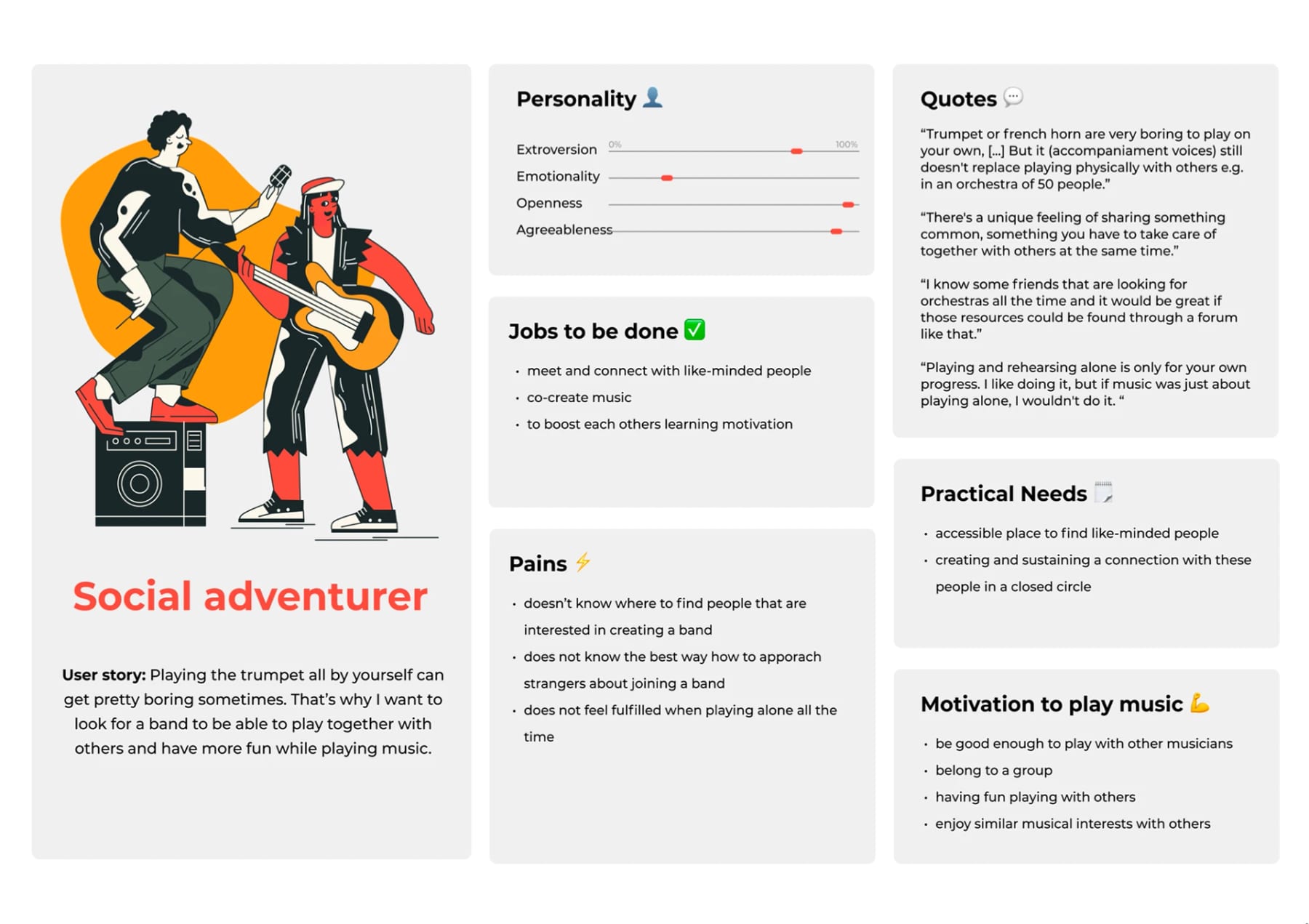
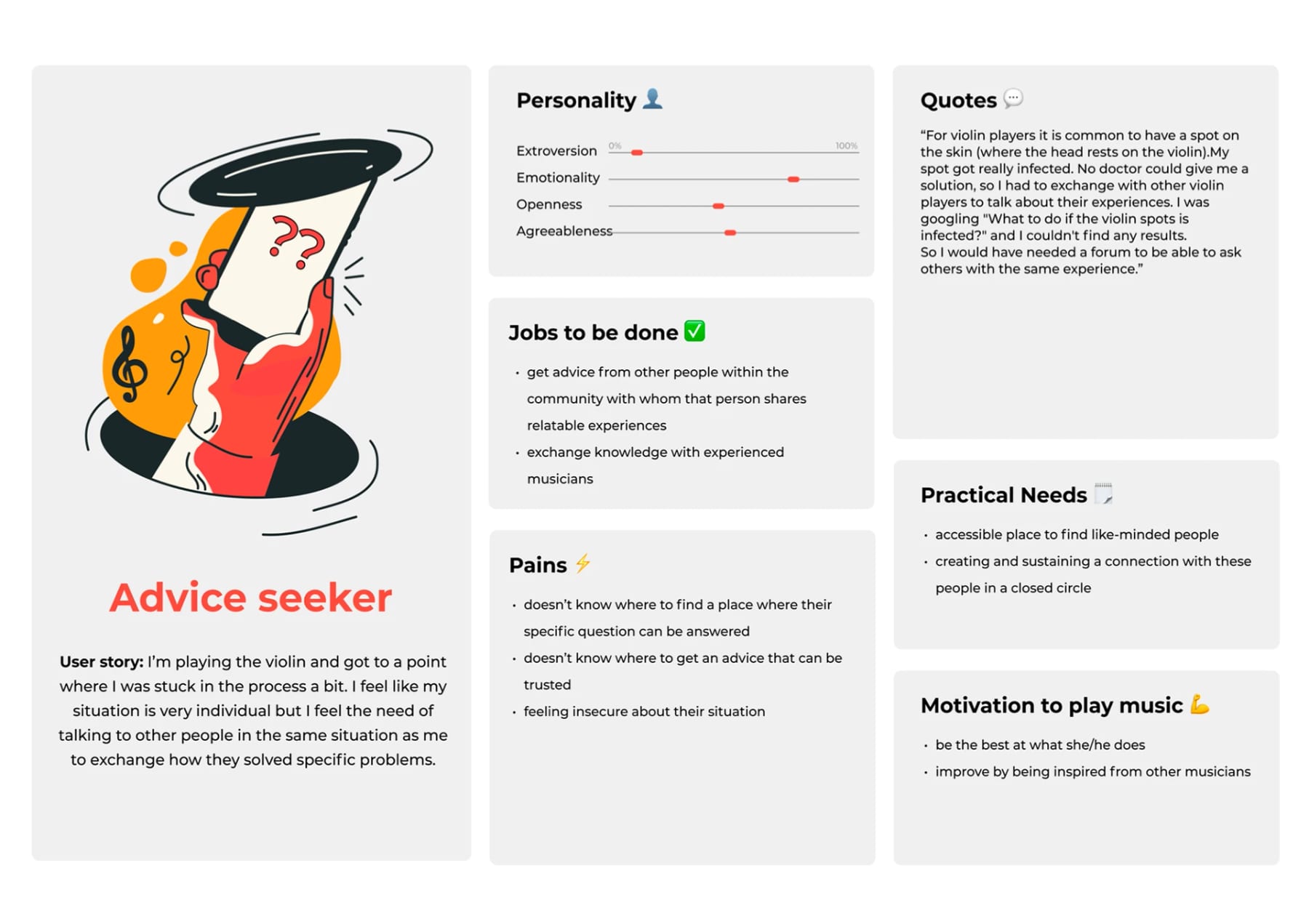
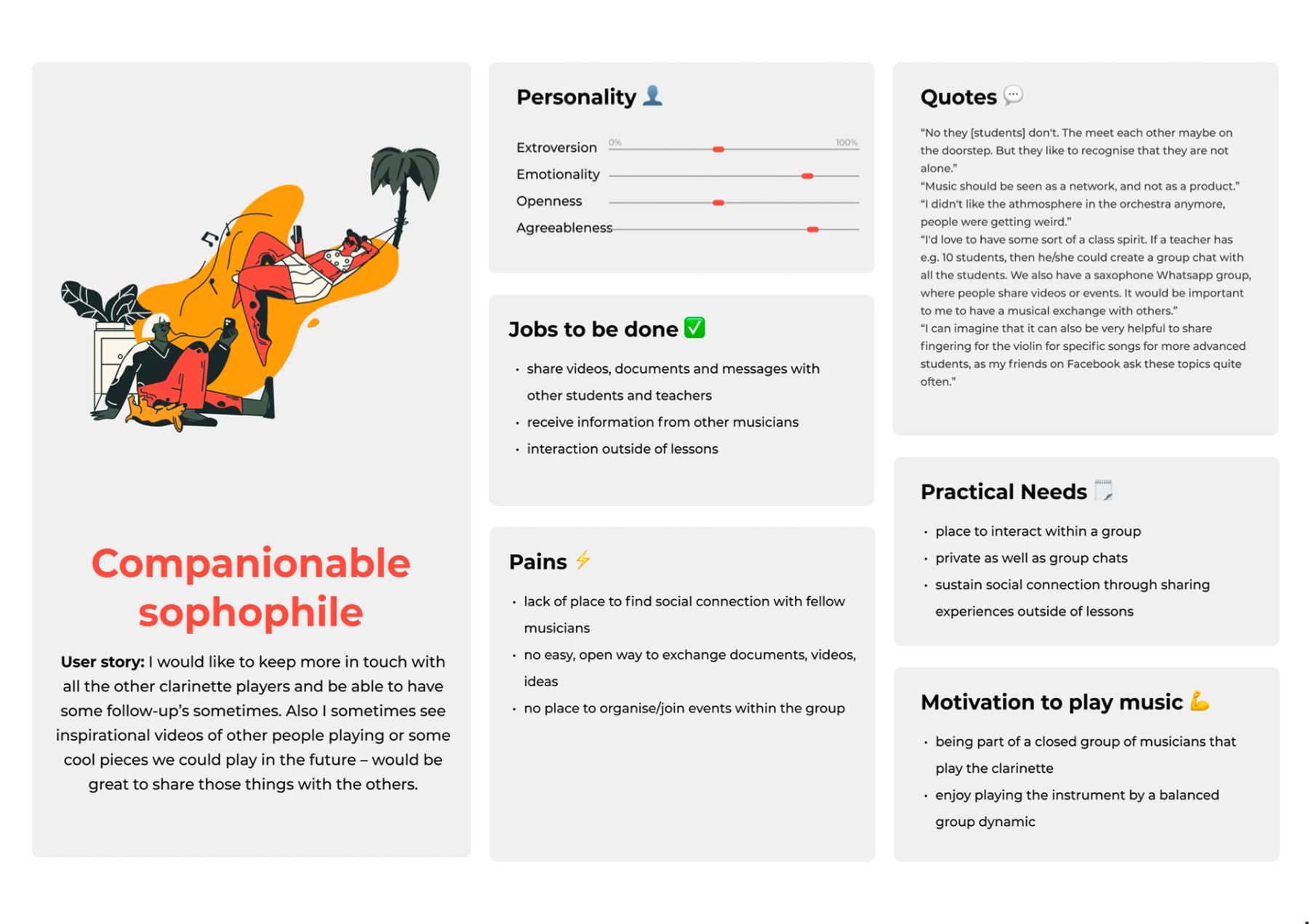
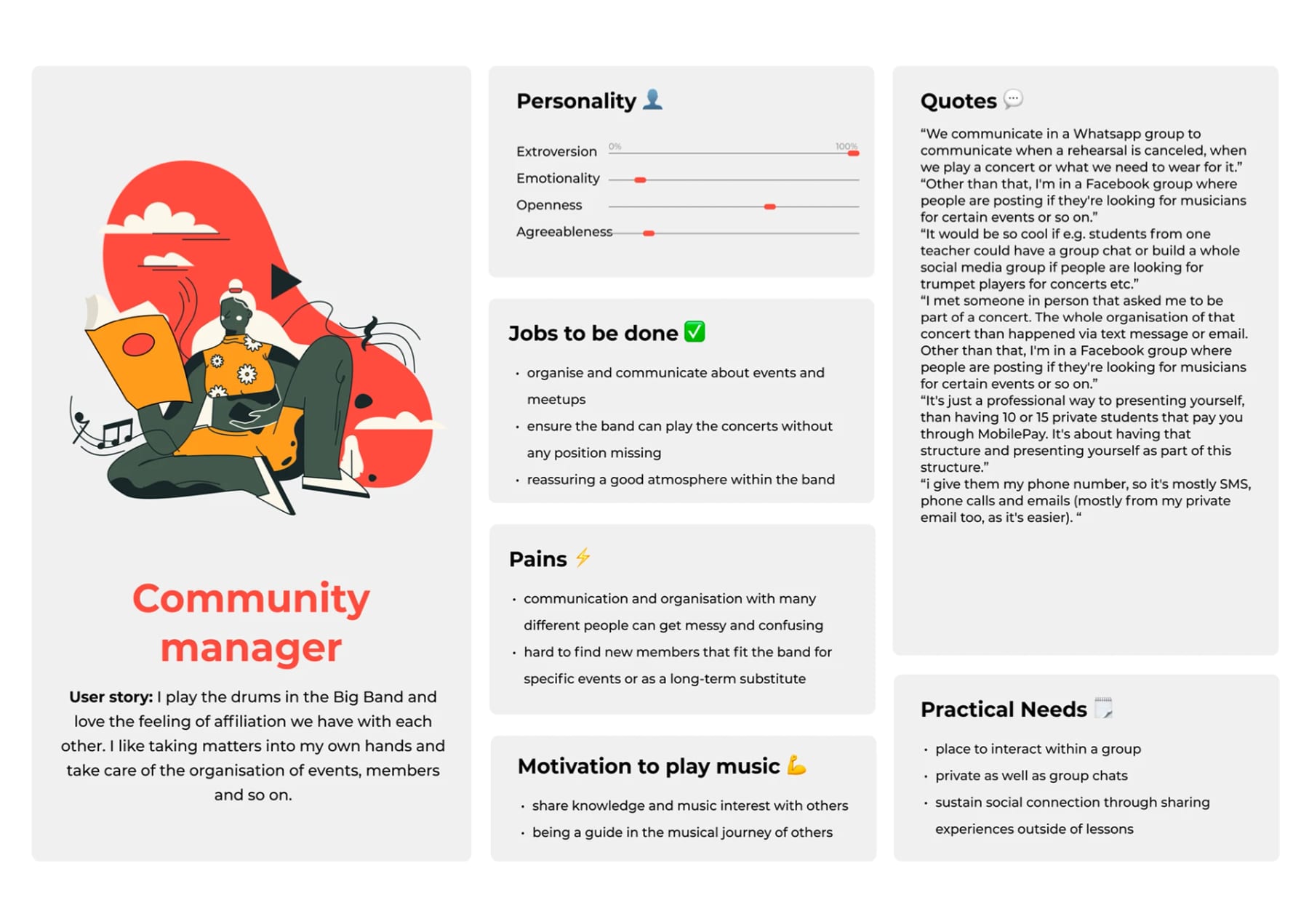
An ideation workshop then turned the personas’ pains into “How might we” questions and twenty-five possible features, grouped into three foundations: interaction between all users, events, and safe spaces to share.
Storyboards
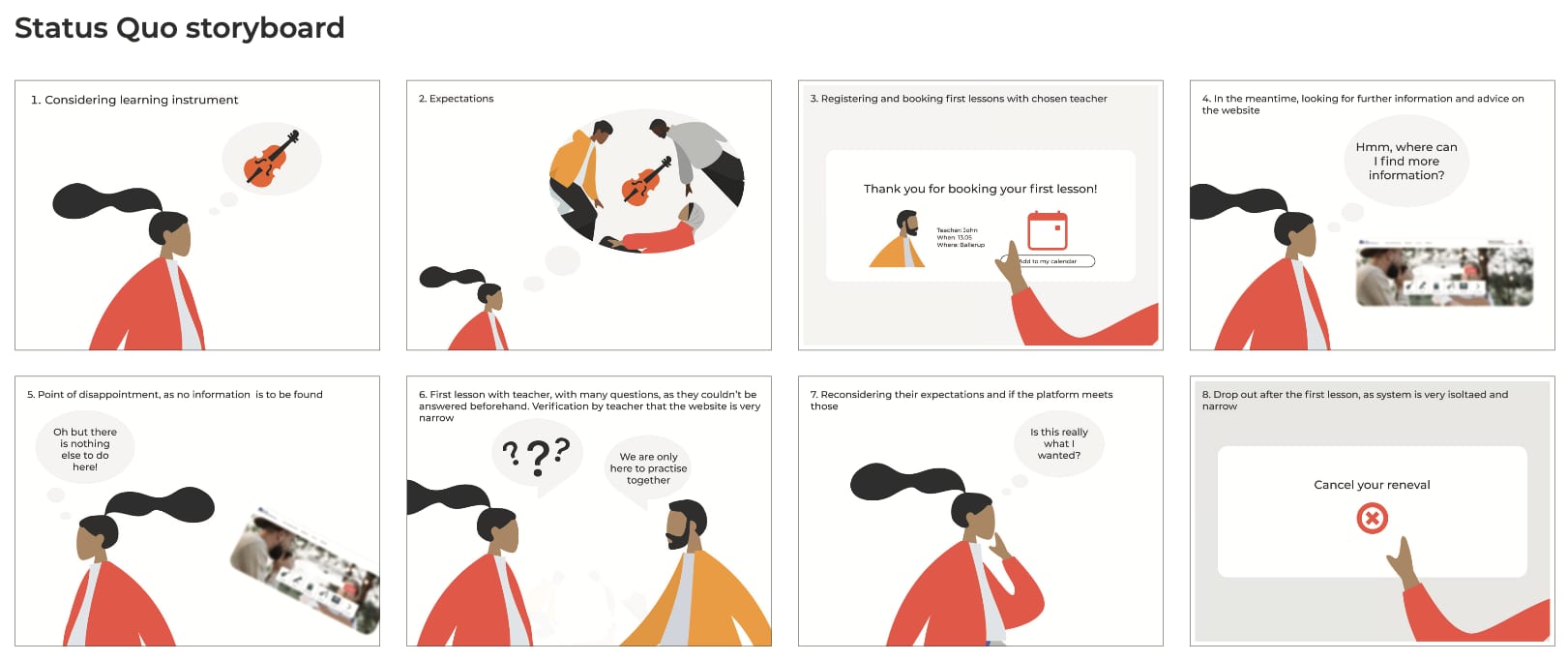
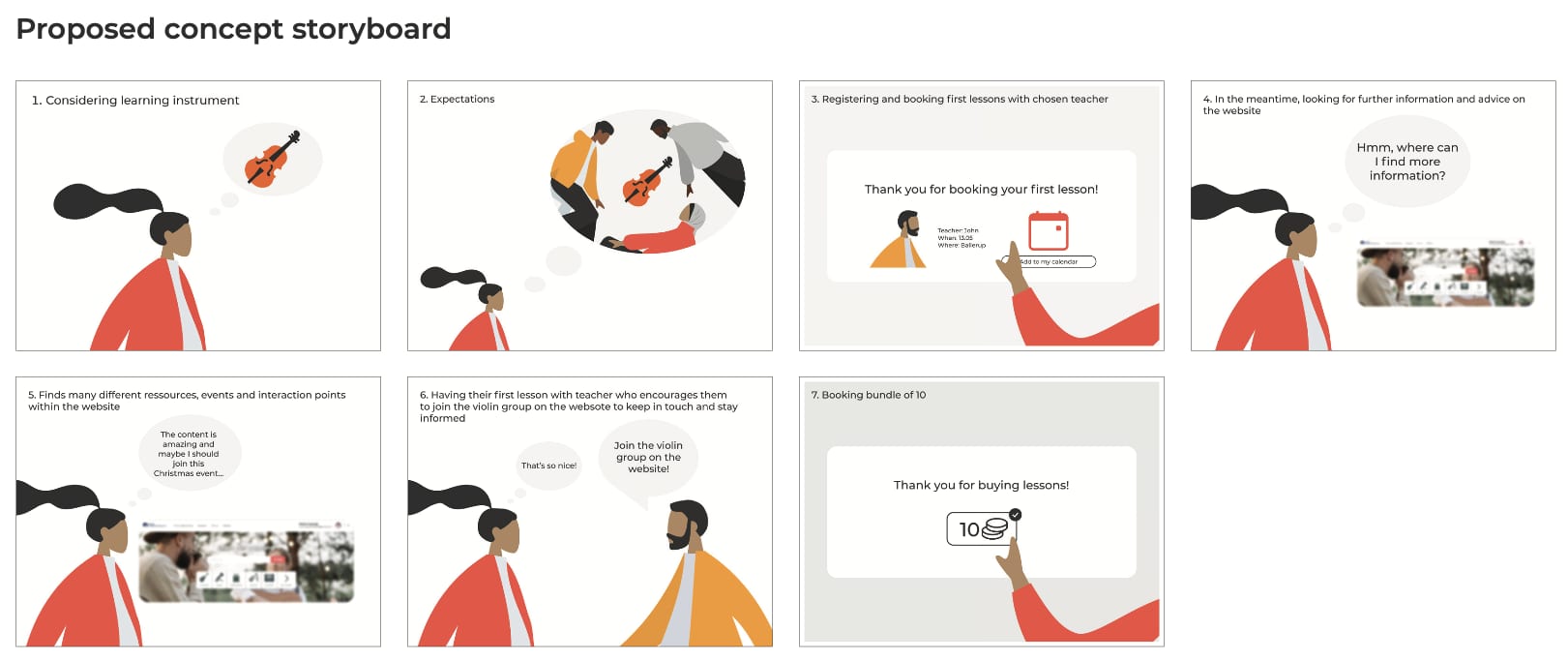
The first storyboard shows the service as it was: a new student books a first lesson, finds nothing on the site beyond buying lessons, and cancels the renewal. The second changes at the fifth frame: the student finds forums, events and other users, their teacher suggests a violin group, and they book a bundle of ten lessons.
User journey
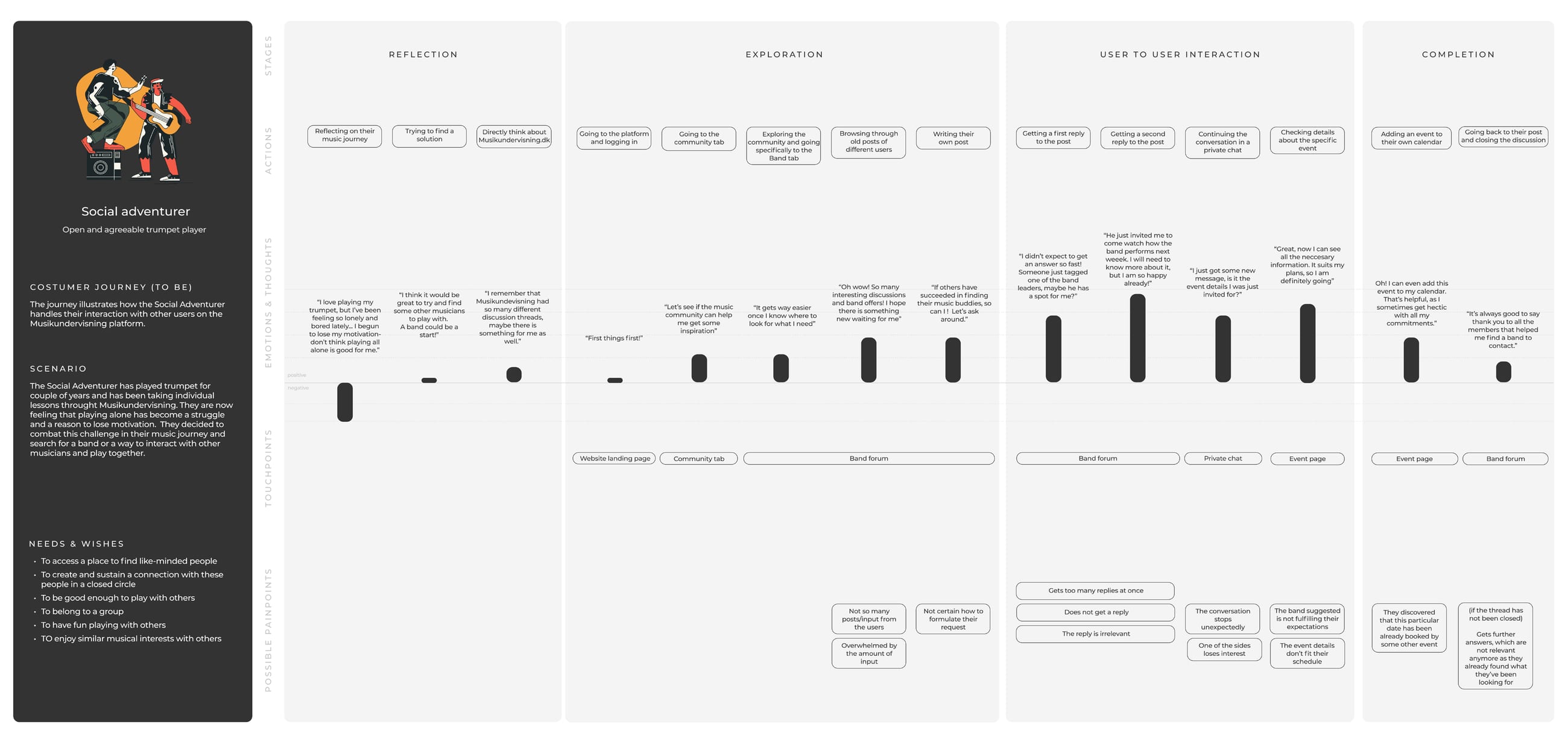
The journey map follows one persona, the Social Adventurer, a trumpet player losing motivation playing alone, as they look for a band through the platform: four stages (reflection, exploration, user-to-user interaction and completion), with emotions, touchpoints and possible pain points such as too many replies at once or a conversation that stops.
Interaction flowchart
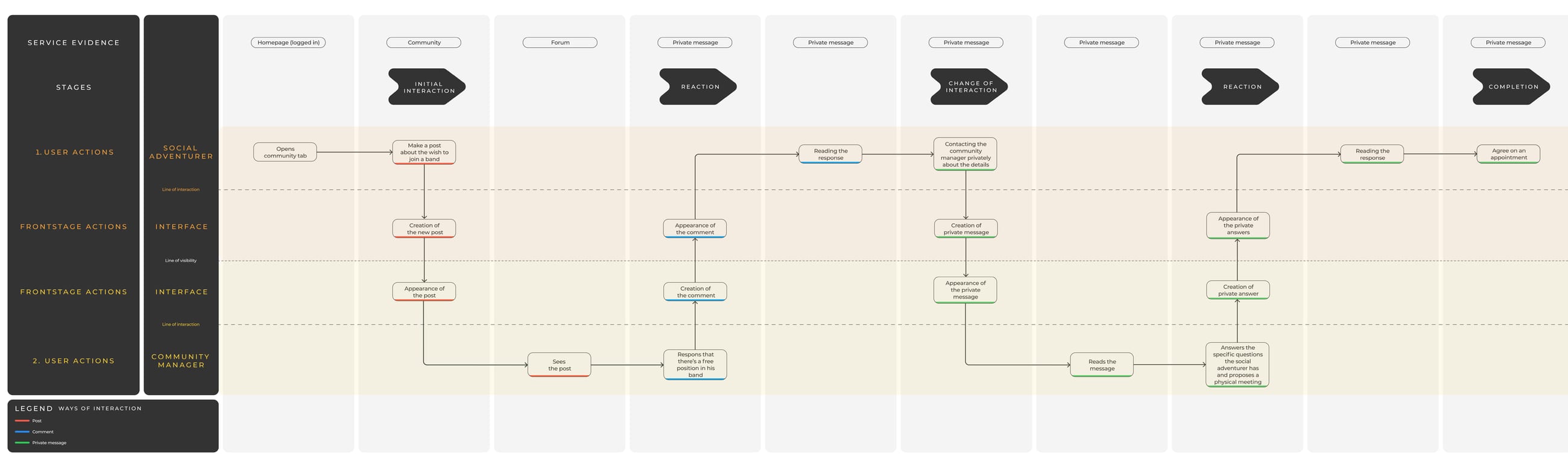
The journey shows one person’s side. The flowchart shows the conversation between two personas, each with their own interface: the Social Adventurer posts that they want to join a band, the Community Manager replies that a position is free, and they move to private messages until they agree to meet.
Motivational matrix
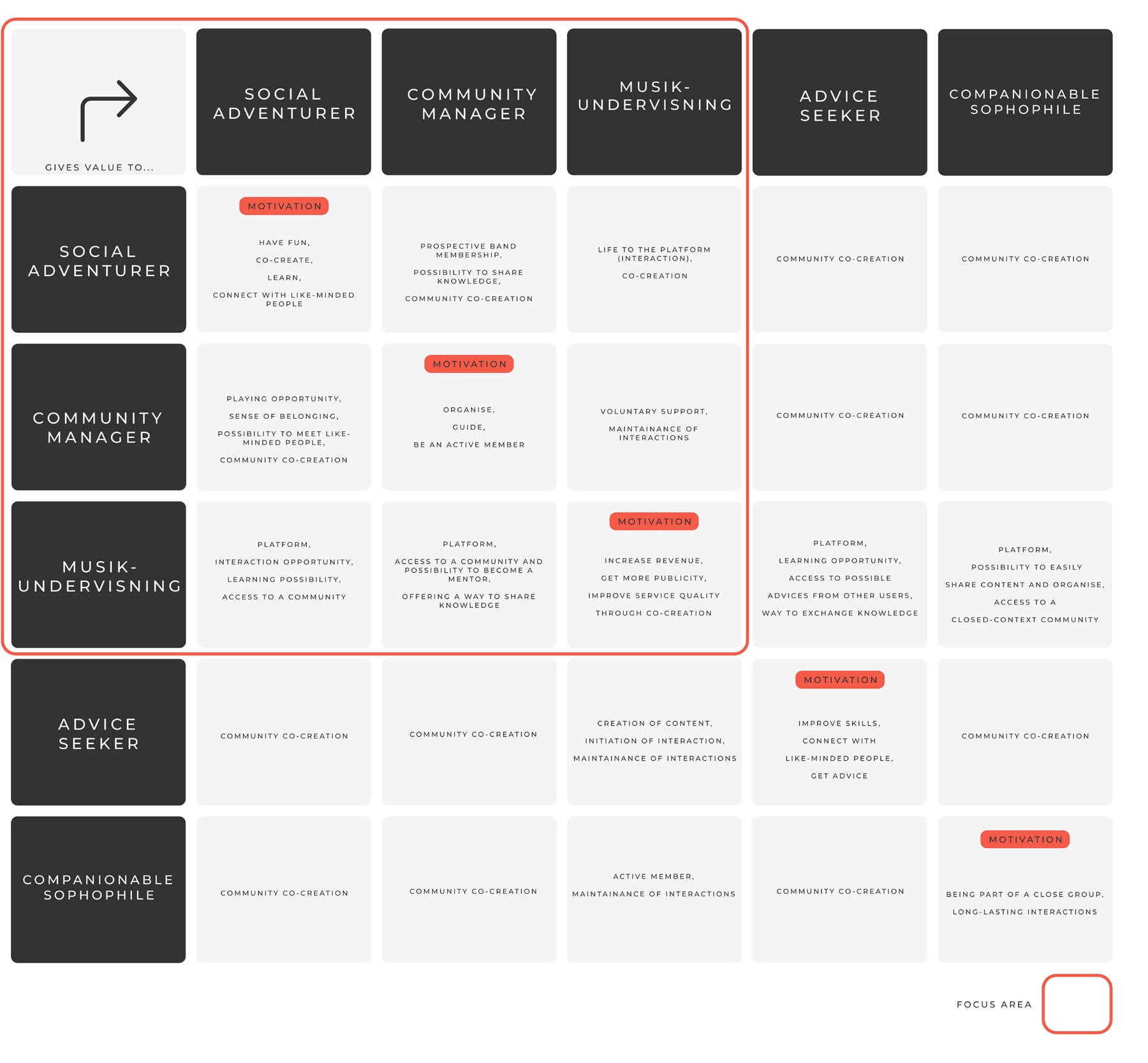
The matrix sets out the value each actor gives the others and what motivates each one. The platform wants revenue, through students who stay and book more lessons, publicity and better service quality; what most actors share is co-creation. The outlined focus area, the Social Adventurer, the Community Manager and the platform, is the trio the rest of the work follows. These motivations were assumptions drawn from the research, still to be validated with real platform users.
Service blueprint
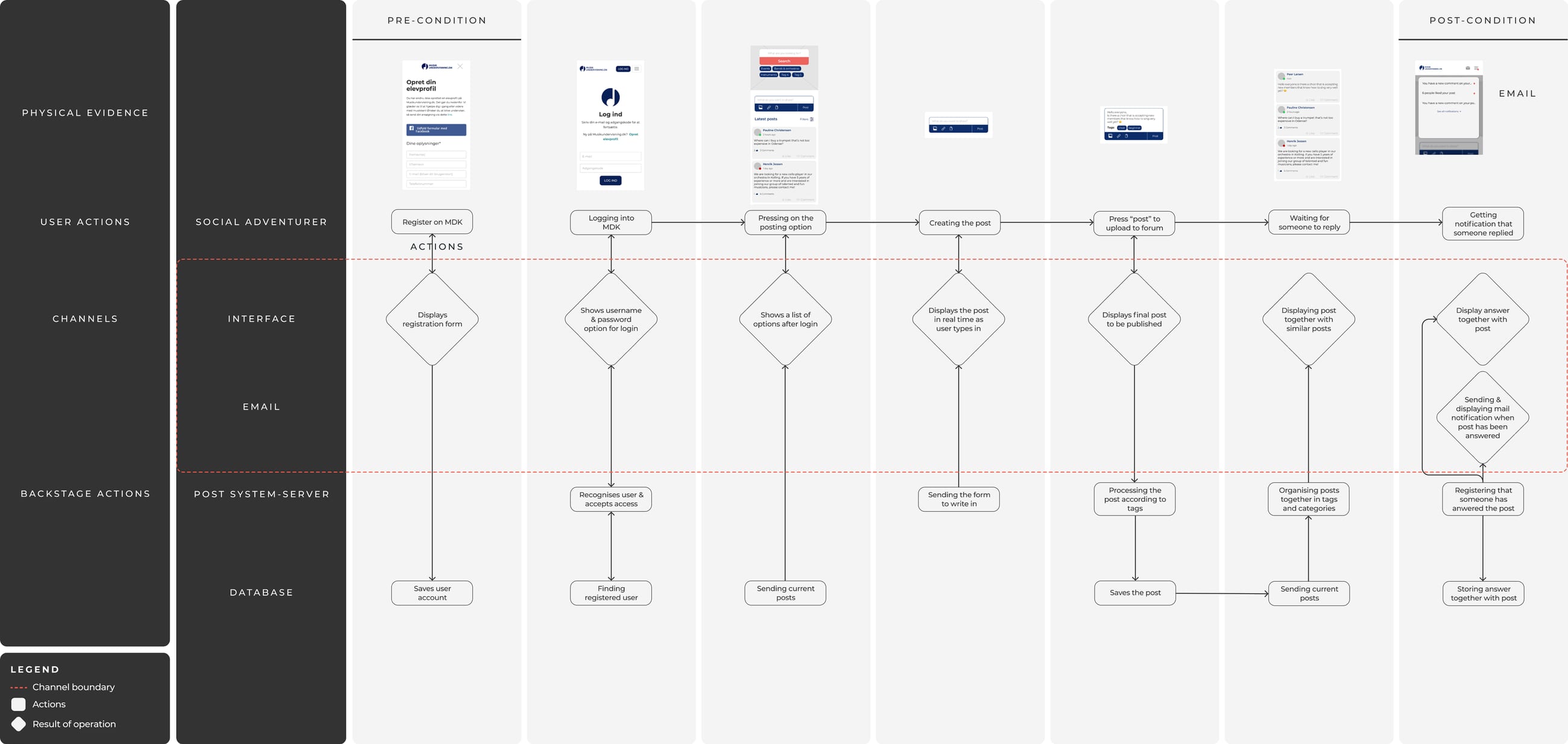
We blueprinted the action that opens the door to the community: posting in the forum. Each step lines up the screen, the email, and the system and database work behind it. Organising it by channel rather than by actor, with the wireframe above each step, made it something designers and developers could read together.
Use cases
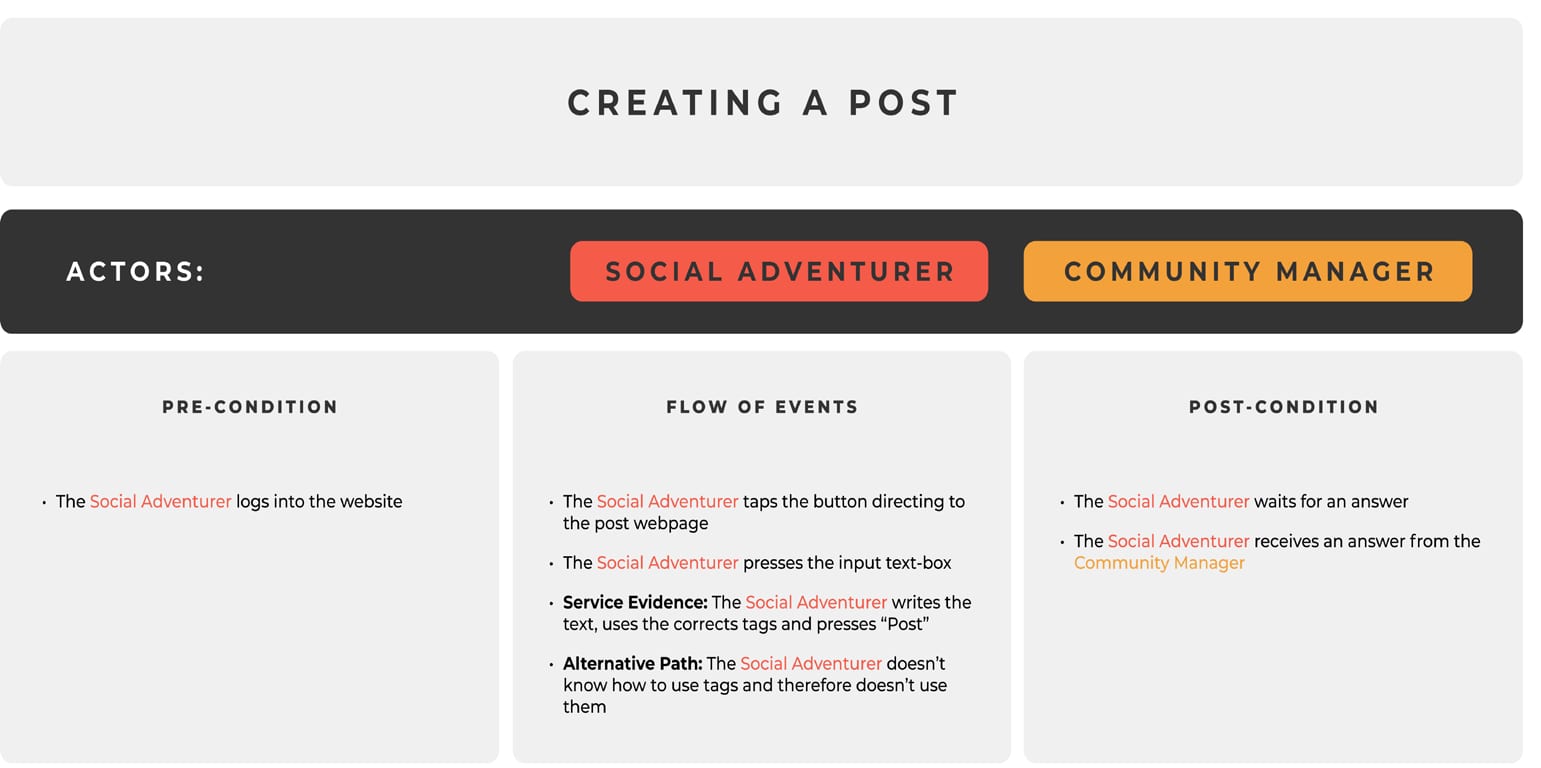
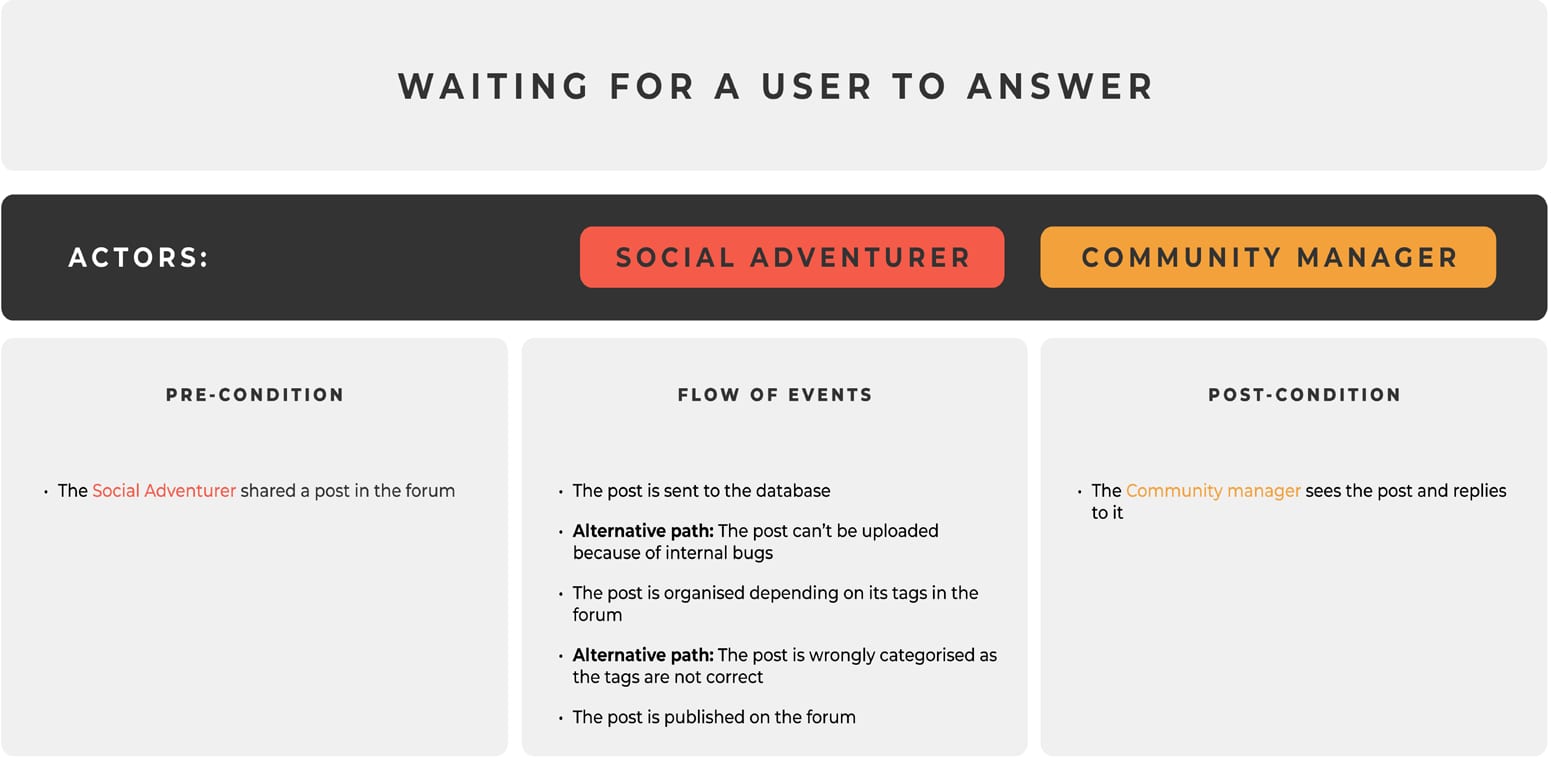
Two use cases zoom in on that same moment, with the conditions before and after it and the alternative paths where it can go wrong: a user who does not know how to tag a post, a post filed in the wrong category, an upload that fails.
Testing the concept
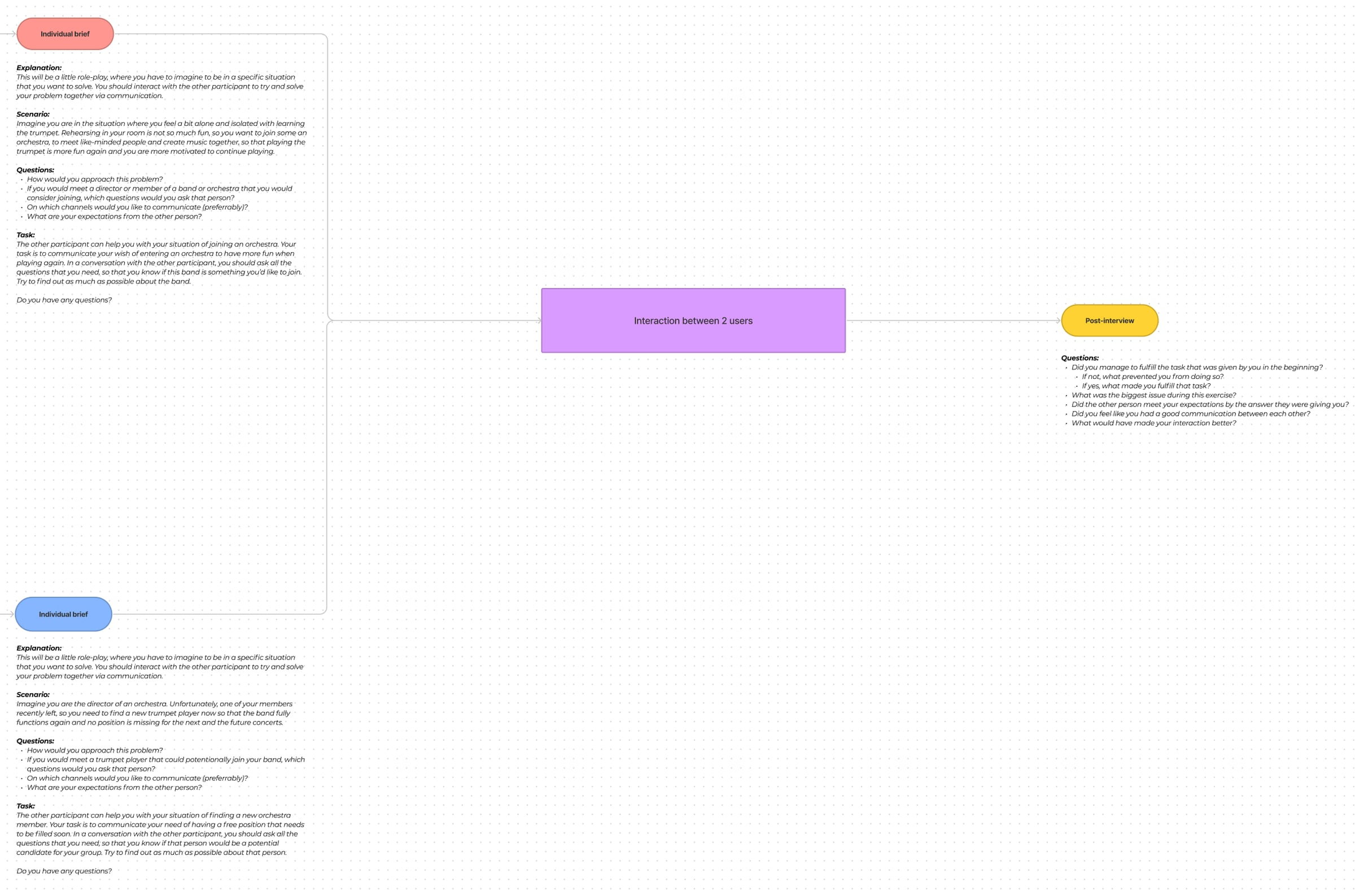
We tested the concept with two musicians, each playing one persona of the focus area from an individual brief: the Social Adventurer wanted to join an orchestra, the Community Manager needed a trumpet player. An interaction test through the wireframes, a persona-based walkthrough and a short interview followed.
What we learned
- The core interaction worked. Both reached their goal and agreed to meet for an audition.
- Private chat first. The chat felt safe for a first contact, before sharing personal details.
- Trust needs a face. Trust depended on profile pictures.
- Bands need their own voice. The Community Manager wanted a band profile, to speak as an organisation rather than a private person.
- Smaller circles matter. Both valued closed groups, such as all the trumpet players or one teacher’s students.
- Categories guide people. Browsing by category first made participants feel guided and taken care of.
- A network for those without one. A community helps most people with no musical network yet, such as students who have just moved abroad.
From findings to the final proposal
We folded these findings into the concept and into the proposals we delivered: profiles that build trust, in line with the platform’s safety standards; organisation profiles for bands and orchestras; the private chat as a safe first contact; closed circles by instrument or by teacher, alongside the open forum; and categories as the way in. Next to explore: testing with the platform’s own users and all four personas, and blueprints and use cases for the other key moments (chatting, creating a profile, joining a group, taking part in an event).
With two test participants who were not platform users, these proposals set a direction to explore, not a validation: the next step was to test them with the people who use Musikundervisning.dk every day.
Handing over
We delivered a first, research-based answer to More Music Technologies’ question: research insights, four personas, the concept from storyboard to blueprint, a tested mobile prototype, and next steps. Deciding what to build, and when, was the company’s call. The work gave them a user-centred foundation for engagement, built on what keeps people playing music: other people.
Takeaways
- Co-creation with real users. We reached one platform user in the interviews and none in the tests. Co-creating with them from the start grounds personas and solutions in real needs; it is the first thing I secure on a project now.
- Test with every persona. Our test covered two of the four, so it could not show how every type uses the platform and interacts with the others.
- Iterate, because every test moves the concept. One session with two people already changed it. A concept like this needs several rounds over a longer timeframe, and iterating with users keeps a team focused on the values people exchange rather than on features.